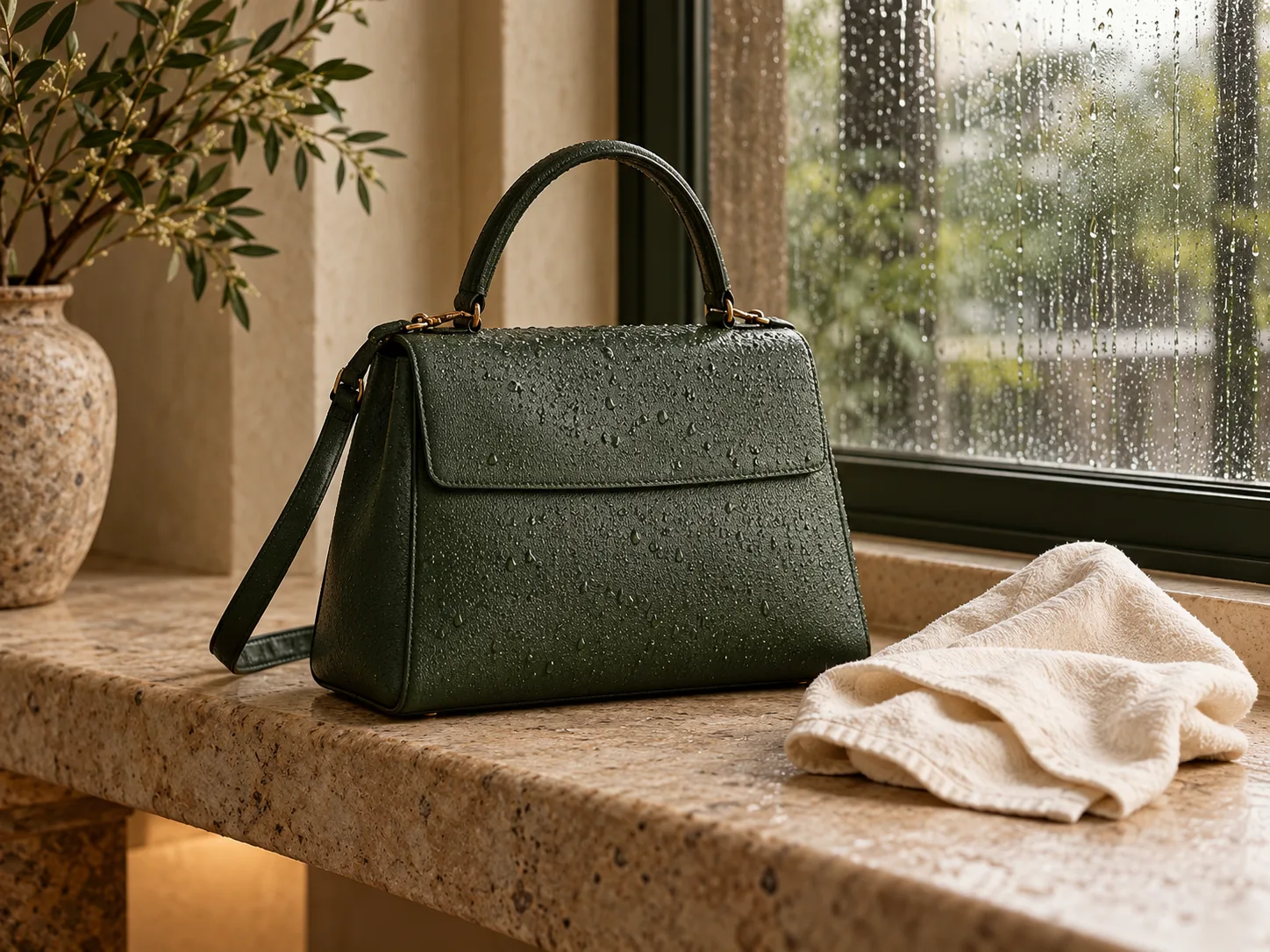
Éloignez le sac de la pluie et de la chaleur, puis évaluez chaque matériau présent.
La réponse rapide
Lorsqu'un sac en cuir est mouillé, déplacez-le dans une zone aérée ombragée, retirez le contenu et épongez l'humidité de surface avec un chiffon blanc absorbant propre. Ne pas frotter, chauffer, sécher au soleil ou appliquer un revitalisant pendant que le cuir est mouillé. Supportez la forme légèrement avec du papier absorbant propre et laissez sécher naturellement le sac, la doublure et les coutures. Si le cuir est en daim, inachevé, pâle, fortement trempé, teinté, déformé ou développant de l'odeur, contactez un nettoyeur professionnel expérimenté avec le matériau.
Agissez rapidement sans précipiter le matériel
Le premier objectif est d'arrêter l'exposition supplémentaire. Fermez le parapluie, déplacez-vous à l'intérieur et gardez le sac loin des planchers sales ou des vêtements mouillés. Réglez-le sur une serviette propre plutôt que de l'accrocher par les sangles tandis que lourd avec de l'eau. Une action rapide est importante, mais le frottement agressif crée de la friction et peut pousser l'eau ou la saleté plus profondément dans la finition.
Prenez quelques photos avant le traitement, surtout si l'article peut avoir besoin de soins professionnels ou une demande d'expédition. Notez si l'exposition était une pluie propre, un déversement, de l'eau salée ou un liquide coloré. Différents liquides créent des risques différents, et un nettoyant aura besoin d'informations précises.
Vider le sac et séparer les pièces amovibles
Enlever l'électronique, les papiers, les cosmétiques et les objets lâches. Vérifiez chaque poche parce que les reçus humides ou les tissus peuvent transférer l'encre et maintenir l'humidité contre la doublure. Détacher les sangles, les charmes ou les pochettes lorsque la conception le permet et lorsque l'enlèvement peut être fait sans forcer la quincaillerie humide ou les onglets en cuir.
Placer le contenu humide séparément. Ne remettez pas les articles humides dans le sac pendant le séchage. Fermetures à glissière et poches ouvertes assez pour le flux d'air, mais ne pas étirer une ouverture rigide. Si un insert en carton ou un organisateur amovible est mouillé, retirez-le afin que l'humidité piégée ne continue pas d'affecter la base.
Faire bouillir l'humidité en douceur plutôt que de frotter la surface humide.
Blot, jamais frotter
Utilisez un chiffon blanc propre, doux et absorbant. Appuyez légèrement sur la surface et soulevez le chiffon. Répéter avec des sections sèches. Travaillez à travers la zone plutôt que de concentrer la pression sur un seul endroit. Pour le cuir texturé, évitez de broyer l'humidité dans le grain. Ne pas utiliser de serviettes colorées, de papier imprimé ou de tissus bruts qui peuvent transférer du colorant ou de la texture.
Si le sac est éclaboussé d'eau sale, le nettoyage à domicile peut propager la contamination ou créer une marque de marée. Retirez seulement le matériau de surface libre sans ajouter plus de liquide, puis demandez conseil approprié. Suede et nubuck ont besoin d'une manipulation particulièrement prudente parce que le frottement change la sieste et le brossage humide peut créer des différences de texture permanentes.
Reformage avec support absorbant de la lumière
Après le buvardage de surface, placer à l'intérieur du papier absorbant propre et non imprimé ou du tissu exempt d'acide. Utilisez suffisamment pour supporter les panneaux, pas assez pour étirer les coutures ou les coins. Remplacez le papier quand il devient humide. Gardez les chaînes métalliques enveloppées loin du cuir humide et les sangles de position afin qu'ils ne pressent pas les lignes dans des panneaux adoucis.
N'utilisez pas de journal parce que l'encre peut être transférée. Évitez les serviettes bien emballées à l'intérieur car elles peuvent contenir trop d'humidité et déformer le sac. La forme souhaitée est la silhouette naturelle légèrement remplie, avec la fermeture à glissière et le rabat détendu plutôt que sous tension.
Sécher lentement dans l'ombre et le débit d'air
Placez le sac dans une zone couverte ombragée avec un flux d'air doux. Un ventilateur peut déplacer l'air de la pièce à distance, mais il ne devrait pas faire sauter un seul panneau. Faites tourner le sac de temps en temps pour que la base et le dos reçoivent la ventilation. Le temps de séchage dépend du matériau, de la doublure, de la construction et de l'humidité du sac. Les coutures et les bases en couches restent souvent humides après que la surface soit sèche.
Ne jamais utiliser de sèche-cheveux, chauffage, radiateur, sèche-linge ou soleil direct. La chaleur rapide peut rétrécir, raidir ou décolorer le cuir et affaiblir les adhésifs. Ne placez pas le sac directement à côté d'une prise de déshumidificateur forte. Les conditions stables de la pièce sont plus sûres que le séchage extrême.
Un support intérieur léger aide le sac à sécher sans s'effondrer ni s'étirer.
Attendez avant d'appliquer un produit
Le cuir humide peut absorber les produits de façon inégale. Le conditionneur, l'huile ou le nettoyant appliqué pendant le séchage peut créer des taches foncées, des résidus ou une structure adoucie. Attendez jusqu'à ce que le sac soit complètement sec et que l'apparence se soit stabilisée. Ensuite, identifiez le cuir et suivez les instructions spécifiques au matériau. Un test de surface cachée est nécessaire même pour un produit utilisé avec succès sur un autre sac.
Ne pas utiliser d'huile de cuisson, de gelée de pétrole, de crème à la main ou de mélanges improvisés pour remplacer l'humidité. Ne pas utiliser d'alcool pour prévenir les odeurs. Ces traitements peuvent causer des dommages plus difficiles à corriger que l'exposition initiale à l'eau.
Évaluer les marques d'eau après séchage complet
Certains cuirs finis se rétablissent avec peu de changement. D'autres montrent une limite plus sombre, des reflets inégaux, de la raideur ou un grain élevé. Ne jugez pas pendant que le sac est encore humide parce que la couleur peut changer pendant le séchage. Une fois complètement sec, comparez la zone affectée à la lumière neutre et touchez-la doucement pour vérifier la texture.
Une ligne d'eau faible sur le cuir lisse compatible peut parfois être traitée avec un soin professionnel ou recommandé par le fabricant, mais le traitement spot peut agrandir la marque. Le cuir pâle, la peau d'agneau, le suède, les finitions exotiques et les sacs avec des matériaux mélangés sont mieux évalués par un spécialiste. Évitez les tentatives répétées à domicile.
Vérifier la doublure, les bords et le matériel
L'extérieur peut sécher avant la doublure. Senser l'intérieur et inspecter les coutures, les coins de base et les poches. Les odeurs humides persistantes, les taches ou la fraîcheur peuvent indiquer que l'humidité est conservée. Continuer la ventilation et remplacer le papier absorbant. Si la moisissure est soupçonnée, isolez l'article et demandez des soins professionnels plutôt que de le brosser à l'intérieur de la maison.
Matériel sec avec un chiffon doux et vérifier l'eau piégée autour des anneaux, des pieds et des fermetures. Ne pas utiliser de polissage métallique ménager. La peinture de bord peut s'assouplir après le trempage, donc évitez de la plier ou de la presser. L'adhérence, l'épluchage ou le transfert de couleur sont des signes d'avertissement de réparation.
Lorsque les soins professionnels sont le choix plus sûr
Demander de l'aide lorsque le sac a été trempé, exposé à l'eau salée ou au liquide coloré, en daim ou en cuir inachevé, ou montrant un fort changement de couleur, rigidité, déformation, moisissure ou odeur. Les soins professionnels sont également judicieux pour les grandes taches sur plusieurs panneaux ou lorsque la valeur et la construction rendent l'expérimentation inacceptable.
Fournir des photos, la source de liquide, le temps d'exposition et toutes les mesures déjà prises. Ne cachez pas les produits à la maison appliqués au sac; cette information affecte le traitement. Transportez l'article seulement après que l'humidité a été effacée et gardez-le dans une protection respirante, non scellée en plastique.
Prévenir le prochain incident
Vérifiez la météo avant d'utiliser du cuir délicat et portez une simple couverture de pluie ou un fourre-tout externe résistant à l'eau, le cas échéant. Conserver les bouteilles verticalement dans un sachet séparé résistant aux fuites. Ne placez pas de sacs sous les tables du restaurant où les déversements s'accumulent. À la maison, entreposez des articles loin des fenêtres, de la plomberie et des murs extérieurs humides.
Un protecteur peut réduire certains mouillages de surface sur des matériaux compatibles, mais il doit être testé et il ne rend pas un sac étanche. La protection la plus fiable reste l'utilisation raisonnable, le transfert rapide et le stockage contrôlé.
Foire aux questions
Puis-je utiliser un sèche-cheveux sur un sac en cuir humide ?
C'est pas vrai. La chaleur directe peut raidir, rétrécir, décolorer ou affaiblir le matériau et la construction.
Dois-je conditionner le sac immédiatement?
C'est pas vrai. Laisser sécher complètement le sac et identifier le matériau avant de considérer tout produit compatible.
Combien de temps un sac en cuir prend-il pour sécher ?
Il varie d'heures à plus d'une journée selon la saturation, le revêtement et la construction. Les coutures et les bases peuvent rester humides après que la surface soit sèche.
Et si le sac sent la moutarde après le séchage ?
Continuer la ventilation et inspecter l'humidité ou les moisissures conservées. Isolez l'objet et demandez des soins professionnels si l'odeur persiste.
Guides connexes
routine de soins en cuir sans danger
Stockage humide des conditions météorologiques
Entretien et stockage des sacs à main
Besoin d'aide pour comparer un article?
Examiner les mesures, les matériaux et l'utilisation prévue avant de commander. Pour des questions spécifiques au produit, contactez le support ORBUYBAG et demandez des photos claires, des dimensions et une courte vidéo de détail.
Conseils révisés : vérifiez la pièce, le devis et les conditions du service avant tout achat.