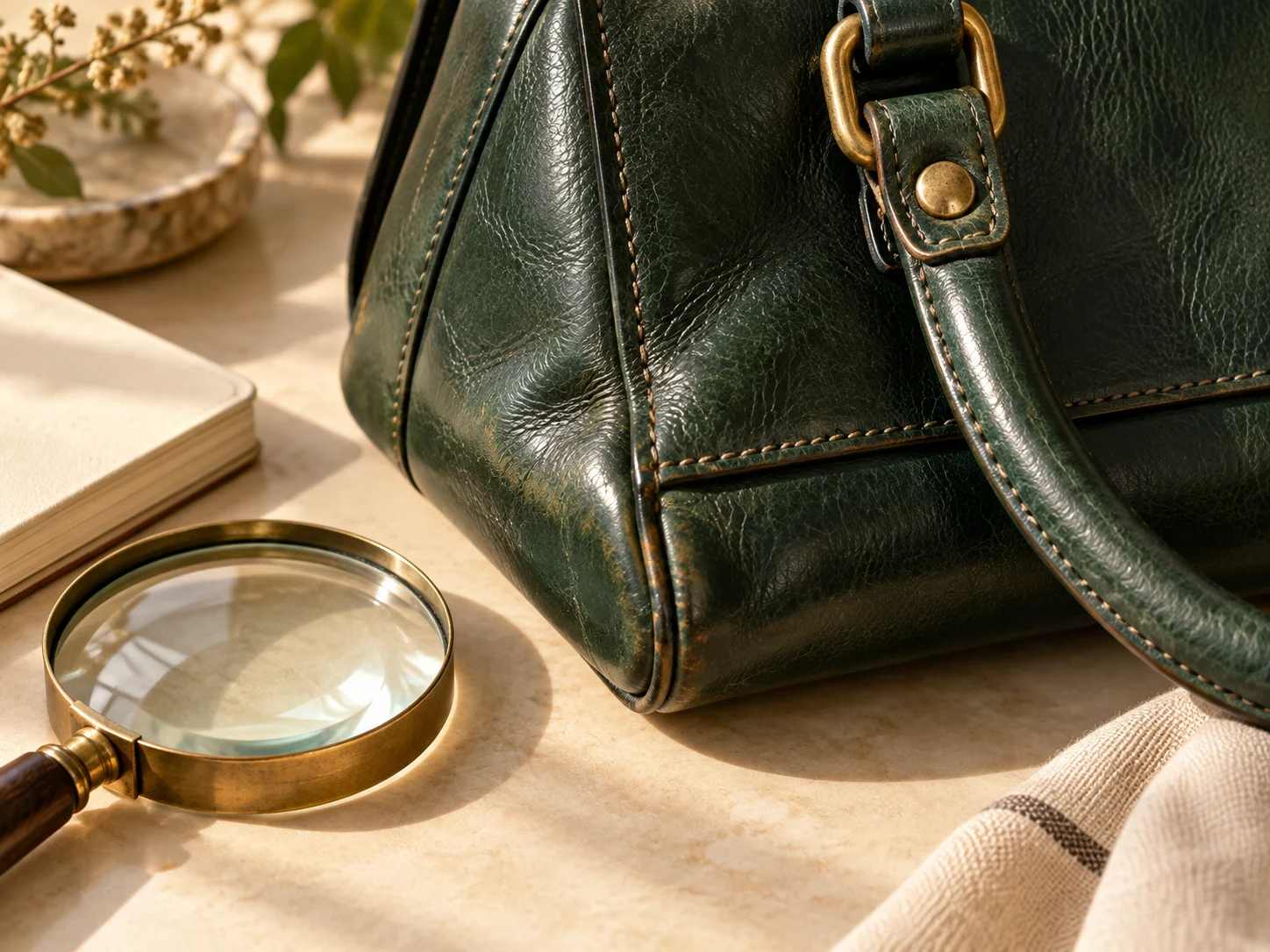
Guide and practical considerations

In the world of fashion, leather luxury bags are not just practical accessories, but also a symbol of identity and taste. Each carefully selected bag carries a unique story and emotion. Therefore, how to extend their lifespan and keep them charming has become the focus of many bag lovers. As a professional luxury care professional, today I will share some practical maintenance tips with you.
Daily cleaning: maintain the basic beauty of the bag
1. Wipe regularly: Leather bags will inevitably be stained with dust and stains during daily use. It is recommended to gently wipe the surface of the bag with a soft dry cloth every week to remove dust. The choice of dry cloth is very important. Avoid using rough fabrics to avoid scratching the surface of the leather. If there is a slight stain on the surface of the bag, you can gently wipe it with a slightly damp soft cloth, and then dry it with a dry cloth. It should be noted here that the amount of water must be small, because too much moisture may cause discoloration or deformation of the leather.
Match the stated material, finish and repair history to the specific version. Close-up photographs and a description of the feel can document condition, but softness, smell, sheen and grain alone cannot determine authenticity. Avoid burning, solvent or scratch tests; retain complete photographs and verify the actual inspection arrangements.
Storage points: provide a good "rest environment" for the bag
Match the stated material, finish and repair history to the specific version. Close-up photographs and a description of the feel can document condition, but softness, smell, sheen and grain alone cannot determine authenticity. Avoid burning, solvent or scratch tests; retain complete photographs and verify the actual inspection arrangements.
2. Maintain ventilation: Good ventilation can prevent the bag from moldy due to moisture. Do not store the bag in a closed space, you can choose to use a dust bag with ventilation holes to store the bag. The dust bag not only prevents dust from entering, but also maintains air circulation. If there is no special dust bag, you can also use a clean old pillowcase or cotton cloth instead.
3. Filling support: In order to maintain the shape of the bag, you can use a clean soft cloth or a special bag filler to support the bag during storage. The choice of filler should be soft to avoid indentation on the surface of the bag. For some bags with special shapes, such as handbags, bucket bags, etc., they should be filled reasonably according to their shape characteristics to ensure that the bag will not be deformed during storage.
4. Hanging method: Some small leather bags, such as wallets, card bags, etc., can be hung for storage. But pay attention to using soft hooks to avoid damage to the bag. For large bags, hanging storage is not recommended, because gravity may cause deformation of the bag.
Stain treatment: respond to emergencies in a timely manner
Do not treat detergent or rinsing with water as a universal care method. Check the instructions for the specific material, avoid forceful rubbing, and seek suitable professional advice for persistent stains, finish damage or unclear repair history.
Leather oils and conditioners are not suitable for every leather, coating or mixed-material item. Follow the instructions for the specific item and consider its repair history. Do not apply oil simply to hide water marks or assume that one product is suitable for the entire bag.
3. Ink stain treatment: If the bag is stained with ink stains, wipe it with a damp cloth as soon as possible to remove the ink as much as possible. Then, you can gently wipe the ink stains with a liquid with a certain cleaning effect such as alcohol or white vinegar, but pay attention to testing in inconspicuous areas first. If the ink stains still cannot be removed, it is best to leave it to a professional caregiver.
Hardware maintenance: make the bag details more outstanding
1. Daily cleaning: The hardware on the leather bag, such as zippers, buckles, etc., are also easily contaminated with dust and stains during daily use. You can wipe the hardware regularly with a dry cloth to keep it clean. For dust in some gaps, you can gently clean it with a soft brush.
2. Prevent oxidation: Hardware is prone to oxidation and rust, which affects the overall appearance of the bag. You can apply a layer of transparent nail polish to the surface of the hardware to play a protective role. But pay attention to applying evenly to avoid the accumulation of nail polish on the surface of the hardware. If the hardware has oxidized, you can use a special metal cleaner to clean it, but it should also be tested in an inconspicuous part first.
Leather care: enhance the texture and durability of the bag
Match the stated material, finish and repair history to the specific version. Close-up photographs and a description of the feel can document condition, but softness, smell, sheen and grain alone cannot determine authenticity. Avoid burning, solvent or scratch tests; retain complete photographs and verify the actual inspection arrangements.
2. Avoid exposure to chemicals: Leather bags should try to avoid exposure to chemicals such as perfumes, cosmetics, and alcohol, as these chemicals may corrode the leather, causing it to discolor, harden, or damage. When using perfume, be careful not to spray it on the bag; when applying makeup, be careful not to let cosmetics rub against the bag. If you accidentally come into contact with chemicals, wipe it with a dry cloth immediately, and clean and maintain it as soon as possible.
Periodic inspections: detect problems in a timely manner and deal with them
Photograph seams, stitching and edge finishing to document wear, structural problems and repair differences. Stitch spacing and construction must be considered in the context of the model and production period. Neat stitches do not prove authenticity; wear or repair does not by itself prove that an item is counterfeit. Seek appropriate inspection where the information is insufficient.
Match the stated material, finish and repair history to the specific version. Close-up photographs and a description of the feel can document condition, but softness, smell, sheen and grain alone cannot determine authenticity. Avoid burning, solvent or scratch tests; retain complete photographs and verify the actual inspection arrangements.
Revised guidance: verify the actual item, quotation and service terms before purchasing.