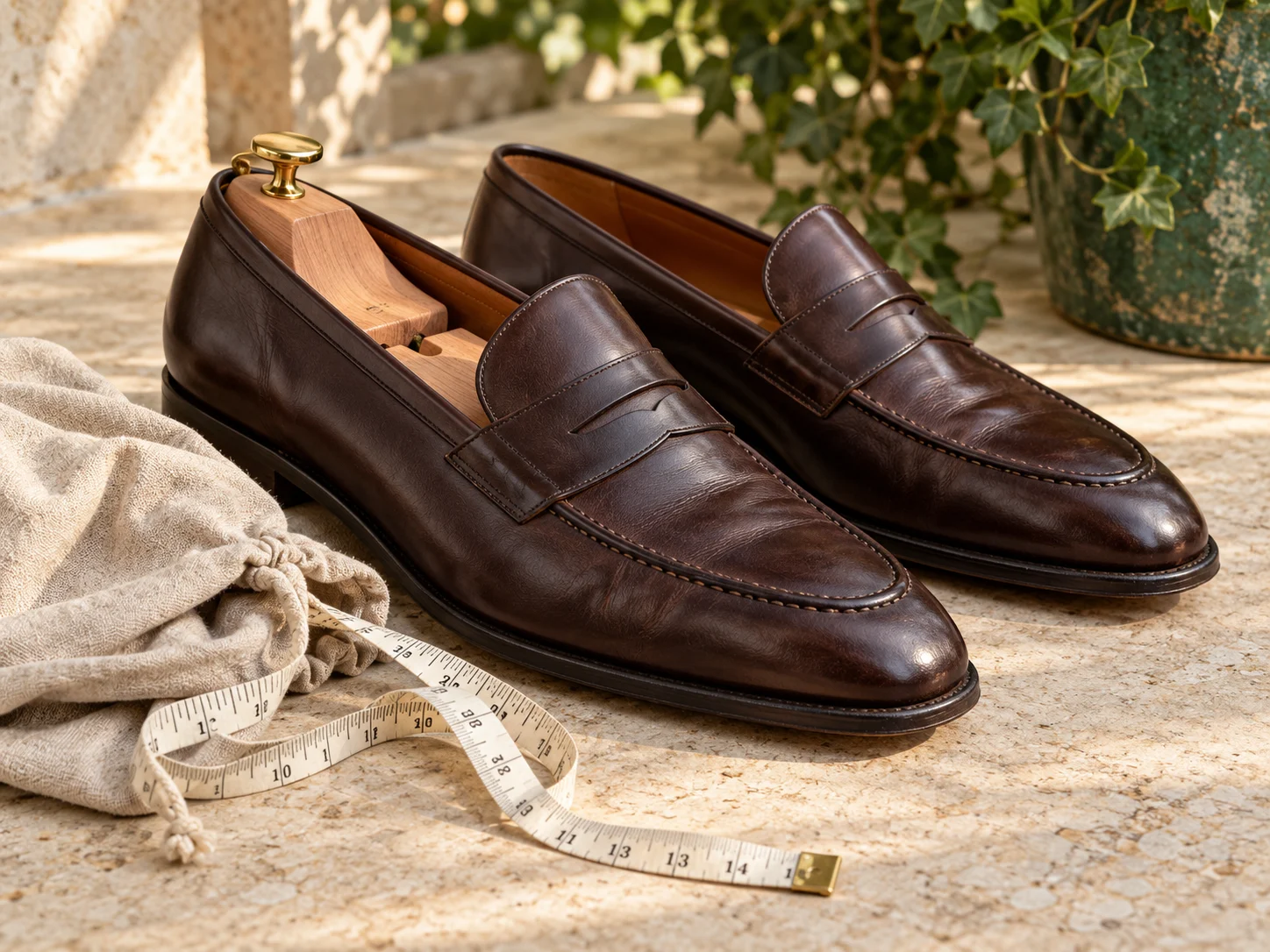
Eine korrekte Passform lässt den Zehenraum, ohne dass der Fuß rutschen kann.
Die schnelle Antwort
Ledersneaker sollten sich durch die Ferse und den Mittelfuß sicher fühlen, während sie genügend Platz für die Zehen lassen, um sich natürlich zu bewegen. Die längste Zehe sollte beim Stehen nicht die Vorderseite berühren, und der breiteste Teil des Fußes sollte sich mit dem breitesten Teil des Schuhs ausrichten. Milde Festigkeit in einem neuen Lederoberteil kann mit Verschleiß nachlassen, aber scharfer Druck, Taubheit, Zehenkontakt oder großer Fersenrutscher sind keine normalen Einbruchzeichen. Messen Sie beide Füße spät am Tag, verwenden Sie die Socken, die Sie tragen möchten, und wählen Sie die Größe für den größeren Fuß.
Beginnen Sie mit Fußmessungen
Messen Sie beide Füße im Stehen, weil das Gewicht die Länge und Breite des Fußes verändert. Tun Sie es später am Tag, wenn die Füße etwas voller sein können. Markieren Sie die Ferse und den längsten Zeh auf Papier und messen Sie dann den Abstand in Zentimetern. Messen Sie auch über den breitesten Teil. Verwenden Sie die größere Messung, wenn sich die Füße unterscheiden. Eine Größentabelle ist nur dann nützlich, wenn sie erklärt, ob sich die aufgeführte Länge auf den Fuß, die Einlegesohle oder außerhalb des Schuhs bezieht.
Konvertieren Sie Größen nicht nur aus dem Speicher. EU-, UK- und US-Etiketten sind zwischen den Herstellern nicht perfekt konsistent, und zwei Schuhe mit demselben Etikett können unterschiedliche Lasten verwenden. Fragen Sie nach interner Länge, Breite und der beabsichtigten Passform. Wenn Sie eine orthotische oder dickere Einlegesohle verwenden, nehmen Sie sie in den Montageplan auf, da sie das Volumen reduziert und die Ferse anheben kann.
Prüfen Sie den Zehenraum im Stehen
Die Vorderseite sollte es den Zehen ermöglichen, auf natürliche Weise zu liegen, anstatt sich zusammenzurollen oder zu drücken. Eine kleine Länge über die längste Zehe hinaus ist normal, aber der genaue Raum hängt von der Zehenform und dem Design des Schuhs ab. Spitz- oder verjüngte Turnschuhe benötigen möglicherweise mehr äußere Länge, da sich der nutzbare Zehenbereich verengt. Das Drücken der Front von außen ist nur eine grobe Prüfung; Stehen und Gehen zeigen, ob der Fuß nach vorne rutscht.
Zehenkontakt beim Absteigen oder Schnellstopps bedeutet normalerweise, dass der Schuh zu kurz, zu locker an der Ferse oder beidem ist. Zusätzliche Länge ist nicht die einzige Lösung, da ein viel zu langer Schuh schlecht knittern und zum Gleiten führen kann. Das Ziel ist ein sicherer Hinter- und Mittelfuß mit einer Zehenbox, die der natürlichen Form der Zehen entspricht.
Die Ferse sollte sich ohne schmerzhaften Druck vom Kragen sicher fühlen.
Die breitesten Punkte ausrichten
Der Ballen des Fußes sollte in der Nähe des breitesten Abschnitts des Schuhs sitzen. Wenn es hinter diesem Punkt sitzt, kann der Schuh zu lang sein. Wenn es vorne sitzt, kann der Schuh zu kurz sein oder der letzte kann nicht mit dem Fuß übereinstimmen. Leder kann sich leicht erweichen und anpassen, aber es sollte nicht erwartet werden, dass eine erhebliche Breite entsteht, bei der die Sohle und die Konstruktion schmal sind.
Suchen Sie nach Seitenwölbung, Druck auf das kleine Zehengelenk und Dichtheit über den Vorfuß. Ein glattes Oberteil kann den Umriss des Fußes zeigen, ohne schmerzhaft zu sein, aber eine starke Verzerrung deutet auf unzureichende Breite oder Volumen hin. Menschen mit breiten Füßen brauchen oft eine andere letzte, anstatt sich einfach mehrere Größen zu bewegen, was einen Fersenrutscher verursachen kann.
Beurteilung des Fersenhalters und des Kragendrucks
Die Ferse sollte sich in den ersten Schritten, wenn überhaupt, nur geringfügig heben. Große Bewegungen können zu Reibung und Instabilität führen. Enge Schnürung kann etwas Schlupf reduzieren, aber es sollte nicht verwendet werden, um einen Schuh zu kompensieren, der im Fond zu lang oder zu breit ist. Überprüfen Sie, ob der Kragen der Fersenform folgt und ob eine steife Naht auf den Knöchel drückt.
Ein neues Lederkragen mag sich fest anfühlen, sollte jedoch keine unmittelbaren Hot Spots schneiden, kneifen oder erzeugen. Probieren Sie die Schuhe mehrere Minuten lang auf einer sauberen Innenfläche aus und gehen Sie mit unterschiedlichen Geschwindigkeiten. Wenn die Ferse nur dann sicher ist, wenn die Schnürsenkel schmerzhaft eng sind, passt die Form nicht gut zusammen.
Verwenden Sie Schnüren zur Feinabstimmung, nicht Rettung, die Passform
Schnürsenkel können das Volumen über den Rist einstellen und die Ferse zurückhalten. Sie können den Schuh nicht verlängern oder die Sohle verbreitern. Beginnen Sie mit gleichmäßiger Spannung von den unteren Ösen nach oben. Der Vorfuß sollte sich nicht komprimiert fühlen, und die Zunge sollte flach liegen. Ein Runner's-Loop-Stil an der Spitze kann den Fersenhalt bei kompatiblen Designs verbessern, sollte jedoch keinen Druck um den Knöchel herum erzeugen.
Hohe Risse können eine lockere Spannung durch die Mitte benötigen, während Füße mit geringem Volumen von einem Zungenpolster oder einer geeigneten Einlegesohle profitieren können. Jede Anpassung sollte die Zirkulation und den Komfort bewahren. Taubheit, Kribbeln oder Brennen ist ein Signal zum Anhalten, nicht eine normale Phase des Zerbrechens in Schuhen.
Das Oberteil sollte sich in der Nähe des natürlichen Vorfußflexpunktes biegen.
Ledereinbruch realistisch verstehen
Lederoberteile können an Flexpunkten erweichen und sich leicht an den Fuß anpassen. Auskleidungen können glatter und Kragen weniger starr werden. Die Sohle, die Zehenlänge und die grundlegende letzte Form ändern sich nicht wesentlich. Ein Schuh, der deutlich kurz, schmerzhaft schmal oder instabil ist, wird nicht durch Verschleiß korrekt. Der Kauf einer unbequemen Größe in der Hoffnung, dass sie sich ausdehnt, ist riskant und kann eine Rückkehr verhindern.
Brechen Sie neue Sneaker allmählich drinnen oder auf kurzen Spaziergängen ein. Tragen Sie die vorgesehenen Socken und inspizieren Sie die Füße danach auf Rötungen oder heiße Stellen. Vermeiden Sie das Einweichen, Erhitzen oder kraftvolles Dehnen von fertigem Leder zu Hause, da diese Methoden das Material, die Klebstoffe oder die Form beschädigen können. Ein qualifizierter Schuhprofi kann bei begrenztem Dehnen beraten, wenn das Problem gering ist und die Konstruktion es erlaubt.
Betrachten Sie Socken und saisonale Veränderungen
Dünne Kleidersocken und gepolsterte Sportsocken verändern die Passform spürbar. Probieren Sie den Schuh mit der am häufigsten verwendeten Sockendicke aus. Wenn der Sneaker sowohl bei warmem als auch bei kühlem Wetter getragen wird, stellen Sie sicher, dass der Schnürbereich bescheidene Änderungen berücksichtigen kann. Füße können bei langen Spaziergängen, Flügen oder warmen Tagen anschwellen, so dass ein Schuh, der sich im Sitzen genau anfühlt, später eng werden kann.
Gleichzeitig ist übermäßiger Platz nicht sicherer. Ein loser Schuh erhöht die Bewegung und kann Reibung erzeugen. Wählen Sie kontrollierten Raum, nicht eine schwimmende Passform. Fragen Sie bei der Online-Bestellung, ob das Kundenfeedback eine schmale, standardmäßige oder großzügige Länge vorschlägt, und vergleichen Sie diese Informationen mit Ihrer gemessenen Breite.
Durchführung eines strukturierten Einbautests in Innenräumen
Stehen, gehen, drehen Sie sich, steigen Sie auf die Zehen und gehen Sie ein paar Schritte hinunter, wenn eine saubere Innentreppe verfügbar ist. Die Ferse sollte kontrolliert bleiben, die Zehen sollten nicht auf die Vorderseite treffen und das Oberteil sollte sich in der Nähe des Fußballens biegen. Beachten Sie jeden Druck, der wiederholt an derselben Stelle erscheint. Testen Sie beide Schuhe, weil sich die Füße oft unterscheiden.
Bewahren Sie alle Verpackungen auf und vermeiden Sie Outdoor-Abnutzung, bis die Passform bestätigt ist. Eine kurze Anpasszeit ist nützlicher als eine Stunde in den Schuhen zu sitzen, weil Bewegung Gleiten und Druck aussetzt. Anhaltende Schmerzen oder ungewöhnliche Fußsymptome sollten von einem qualifizierten Gesundheits- oder Schuhfachmann bewertet werden, anstatt durch aggressive Einbrüche gelöst zu werden.
Online-Bestellcheckliste
Fordern Sie das Größendiagramm in Zentimetern, die Einlegesohle oder interne Länge, die breiteste interne Messung und Informationen über die letzte an. Bestätigen Sie, ob die Einlegesohle abnehmbar ist. Fragen Sie nach Seiten- und Top-Fotos, um die Zehenverjüngung und das Instep-Volumen zu beurteilen. Vergleichen Sie mit einem gut sitzenden Paar, das auf die gleiche Weise gemessen wird, aber denken Sie daran, dass die Länge der Außensohle nicht mit der nutzbaren Innenlänge übereinstimmt.
Wählen Sie einen Verkäufer mit klarer Größenunterstützung und Rückgabebedingungen. Senden Sie beide Fußmaße, übliche Größen und jedes Passungsproblem wie breiten Vorfuß oder schmale Ferse. Präzise Informationen führen zu einer besseren Orientierung, als nur ein bekanntes Größenlabel anzugeben.
Häufig gestellte Fragen
Sollten sich Ledersneaker zunächst eng anfühlen?
Sie können sich fest fühlen, aber sie sollten keinen scharfen Druck, Taubheit, Zehenkontakt oder starke Seitenkompression verursachen.
Wie viel Fersenrutscher ist akzeptabel?
Sehr leichte Bewegung kann sich niederlassen, wenn die Sohle biegt, aber offensichtliches Heben oder Reiben deutet darauf hin, dass die Größe oder Form falsch ist.
Sollte ich Größe bis für breite Füße?
Manchmal, aber eine breitere letzte ist oft besser als das Hinzufügen von übermäßiger Länge. Vergleichen Sie Breite und Volumen, nicht nur Größenetiketten.
Können Ledersneaker eine volle Größe dehnen?
Nein. Leder kann sich leicht erweichen und anpassen, aber die Länge der Sohle und die Grundlänge ändern sich nicht um eine volle Größe.
In Verbindung stehende Leitfäden
EU Schuhgrößenleitfaden
Schuhpflege Guide
Handbücher für Schuhe
Brauchen Sie Hilfe beim Vergleich eines Artikels?
Überprüfen Sie die Messungen, Materialien und den Verwendungszweck vor der Bestellung. Bei produktspezifischen Fragen wenden Sie sich an den ORBUYBAG-Support und fordern klare Fotos, Abmessungen und ein kurzes Detailvideo an.
Überarbeiteter Ratgeber: Prüfen Sie Artikel, Angebot und Leistungsbedingungen vor dem Kauf.