岚奢包

+85294438892

探索全球精选时尚单品,演绎您的独特品味

包袋护理与收纳

How to Store Structured Handbags Without Losing Their Shape

05 Aug, 2026    /    浏览量:

How to Store Structured Handbags Without Losing Their Shape

How to Store Structured Handbags Without Losing Their Shape(数字1)
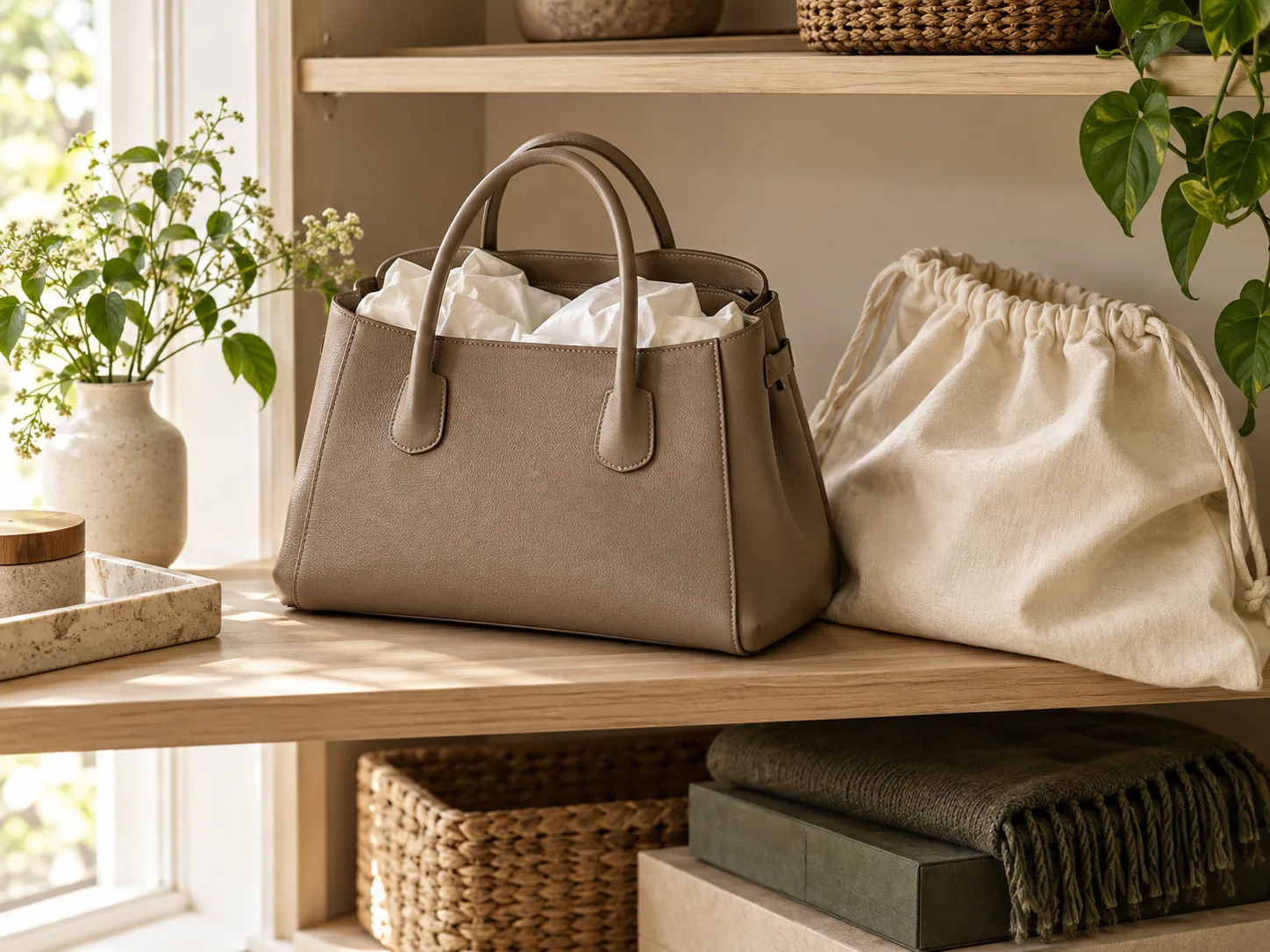
Support should preserve the natural body without stretching seams or forcing a new shape.

The quick answer

Store a structured handbag clean, completely dry and upright on a stable shelf with enough space on all sides. Fill the interior lightly with clean acid-free tissue, soft white cloth or a breathable insert shaped to the natural body. Do not overstuff, because outward pressure can stretch panels, zippers and seams. Close the bag gently, wrap exposed chain or hardware separately and place the item in a breathable dust cover. Keep handles and straps relaxed, avoid stacking and inspect the bag regularly in humid conditions. Shape is preserved by even support and low pressure, not by forcing the bag to stand rigidly.

Clean and dry the bag before storage

Empty every pocket and remove loose dust with a clean soft cloth or suitable brush. Check the base, corners, handle undersides and zipper channels. Do not put a recently used bag directly into a cover when rain, perspiration or cleaning moisture may remain. Trapped moisture and limited airflow increase the risk of odor, marks and material change.

Allow the bag to rest in shade with gentle room airflow. Keep it away from direct sun, heaters and hair dryers. When a material requires conditioning or specialist care, follow a compatible method and allow the surface to settle fully before storage. Storage should begin with a stable dry item, not with a product still evaporating.

Support the natural silhouette lightly

Use clean unprinted acid-free tissue, washed white cotton or a breathable shaped insert. Build the support gradually, placing it at the base and corners first. The bag should look like its normal lightly filled shape, not like a fully packed display sample. Stop when panels are supported without bulging and the closure can move freely.

Avoid newspaper, colored tissue and printed paper because ink and dyes can transfer. Plastic bags and bubble wrap can trap moisture and create pressure points. Towels may be too heavy for a delicate base. If using an organizer as support, confirm that it is clean, dry, colorfast and slightly smaller than the interior.

How to Store Structured Handbags Without Losing Their Shape(数字2)
Handles and straps should rest in a relaxed position rather than pulling on attachment points.

Protect handles, straps and chain

Handles should rest naturally rather than being pulled upright for months. If they fold down, place a soft white cloth between the handle and body to reduce impressions. Do not hang a filled handbag by its handles, because continuous load stresses attachment points and can lengthen or bend them. Keep the bag's weight on its base.

Detach long straps when the construction allows and store them loosely rolled without sharp folds. Wrap chain so it does not press against leather or coated surfaces. Never tape hardware directly. Clips should remain closed and separated from delicate panels. Photograph the original strap route if it is complex, so it can be reattached correctly.

Close the bag without creating tension

Fasten zippers, snaps and locks only when the supported shape allows them to close without strain. A zipper under tension can change the top line. A flap should rest naturally; tightly locking a thick stuffed bag may leave pressure around the clasp. If a closure must remain open to avoid stress, protect the hardware from contact and dust.

Do not leave heavy objects inside. Keys, wallets and organizers create permanent localized weight. Remove removable base boards only when the design permits and store them flat. Keep paperwork, straps and small components in clean breathable pouches so they do not move against the lining.

Choose a stable shelf position

Place the bag upright on a clean level shelf with space between neighboring items. Do not squeeze it between boxes or let another bag lean against the sides. A tall structured tote may need additional internal support, while a top-heavy shape may need a low breathable divider beside it, not pressure on the panel. Check that the base sits evenly.

Never stack heavy items on top. Avoid hanging storage, wire shelves that mark the base and rough unfinished wood. A smooth shelf liner can protect the base if it is breathable and colorfast. Keep bags away from exterior walls, bathrooms, kitchens and air-conditioner drips where temperature and humidity fluctuate.

How to Store Structured Handbags Without Losing Their Shape(数字3)
Clean dry corners and a stable base are essential before longer storage.

Use a breathable cover and controlled environment

A breathable dust cover protects from dust and light while allowing gradual air exchange. Avoid sealed plastic for long storage, especially in humid weather. Keep the bag away from direct sunlight, which can fade color and heat adhesives. A cool, stable room is generally safer than a hot attic, vehicle or damp cabinet.

Monitor room humidity with a simple meter when conditions are humid. Use room-level dehumidification according to equipment instructions rather than placing strong drying chemicals directly against the bag. Desiccant packets should never touch the material and must be maintained. Excessive dryness can also affect some materials, so aim for stability rather than extreme treatment.

Rotate and inspect stored bags

Open the cover and inspect the item regularly. Look at corners, base, lining, hardware and the places where handles touch the body. Smell can reveal trapped moisture before visible change appears. Gently adjust the clean internal support if it has settled. Do not repeatedly reshape the bag by force.

Rotate the position slightly when a soft side receives constant pressure. Air the cover and shelf, then return the bag only when everything is dry. Regular inspection is especially important during rainy seasons and after moving the bag to a new room. Storage is an ongoing routine, not a one-time packing task.

Avoid common shape-damaging shortcuts

Do not overfill the bag with clothes, pillows or hard boxes. Overstuffing stretches seams and can flare the sides. Do not leave the bag empty if its panels collapse under their own weight. Do not hang it from a hook, clamp the handles together or wrap the body tightly. These methods replace natural support with concentrated force.

Avoid adhesive tape, colored foam, scented products and direct contact with printed paper. Do not apply conditioner merely because the bag is entering storage; unnecessary product can alter finish or attract dust. Use material-specific care only when needed and tested. The safest storage method is clean, light, breathable and reversible.

Prepare stored bags for seasonal return

When a stored bag returns to use, remove support gently and inspect the lining, corners, handles and closures before loading it. Let the bag air in shade for a short period. Do not immediately fill it to maximum capacity after months of storage. A gradual return allows you to notice stiffness, settled folds or hardware contact before daily pressure is added.

Clean the dust cover and shelf before switching seasonal items. Review whether the old support still fits the bag's natural shape. Replace crushed or discolored tissue. Record any changes with photos so future inspections are objective. This simple transition routine prevents storage materials from remaining inside during use and helps identify environmental problems early.

Frequently asked questions

Should a structured handbag be stored with the zipper closed?

Close it only when the bag is lightly supported and the zipper moves without tension. Do not force the top line.

Can handbags be stored in their boxes?

A clean box can add protection when there is adequate space and airflow, but avoid tight packing and inspect regularly in humid climates.

Is a bag pillow better than tissue?

A breathable colorfast insert can be convenient if it matches the natural interior. It should not press outward.

How often should stored handbags be checked?

Inspect periodically and more often during humid seasons, after water exposure or when the storage environment changes.

Need help comparing an item?

Review the listed measurements, materials and intended use before ordering. For product-specific questions, contact ORBUYBAG support and request clear photos, dimensions and a short detail video.

What to Do When a Leather Bag Gets Wet

04 Aug, 2026

What to Do When a Leather Bag Gets Wet

--

不包括在内。