The quick answer
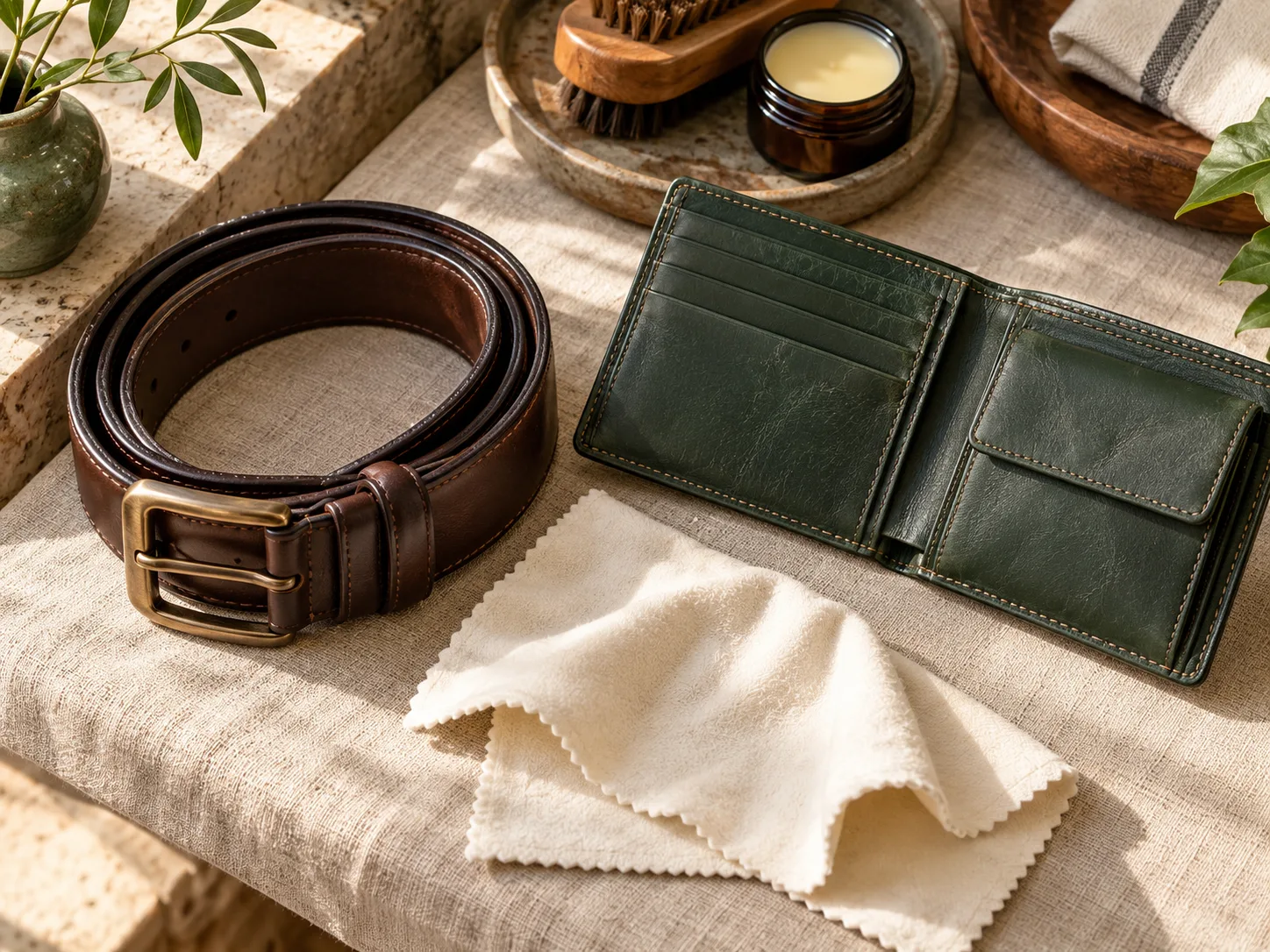
Keep belts, wallets and small leather accessories clean, dry and lightly used rather than tightly packed. Wipe loose dust with a soft cloth, remove unnecessary cards and receipts, and allow items to air after exposure to rain, heat or perspiration. Store belts hanging from an appropriate buckle support or in a loose wide coil, never in a sharp fold. Keep wallets and card holders in breathable covers without heavy objects on top. Separate chains, keys and metal pieces from leather surfaces. Use only material-compatible products after a hidden-area test; harsh household cleaners, alcohol and excess conditioner can change color, finish and structure.
Recognize why small leather goods wear differently
Wallets, belts and card holders are handled more frequently than many bags. They contact skin, pockets, denim, keys, tables and vehicle interiors. The same small edge bends thousands of times. Because the item is compact, a little extra content creates significant pressure. Care should focus on reducing friction, overfilling, moisture and repeated stress at the same points.
Construction varies widely. Some items use smooth leather, grain, coated surfaces, suede, textile lining, edge paint, metal logos or mixed materials. A method suitable for one surface may harm another. Read any available care information and test cautiously. The goal is controlled maintenance, not making a used item look artificially new.
Empty and inspect accessories regularly
Remove receipts, coins, expired cards and objects that no longer need to be carried. Check card slots, folds, zipper ends, snap areas and edge paint. For belts, inspect holes, buckle attachment, keeper loops and the point where the belt bends around the body. Early signs of strain are easier to manage when the item is not still under pressure.
Use a clean dry soft cloth to remove loose dust. A small soft brush can help around stitching when appropriate. Do not scrape residue with sharp tools. If an item is damp, empty it and allow it to dry naturally in shade. Keep it open enough for air to reach lining without forcing the construction flat.

Avoid overfilling wallets and card holders
Card slots are designed for limited thickness. Placing several cards in one slot stretches the leather and stitching. Thick stacks of receipts distort folds and prevent snaps or zippers from closing naturally. A wallet should close without strong pressure. If daily contents no longer fit, reduce them or choose a construction designed for greater capacity.
Coins and keys create hard pressure points. Keep them in dedicated compartments only when the design supports them. Do not sit on a thick wallet for long periods; body weight and heat accelerate bending. Alternate cards between slots only when necessary, because repeatedly forcing different thicknesses also changes shape.
Store belts without sharp creases
A belt can be hung from a suitable buckle hook when the buckle construction supports it and the belt hangs freely. Alternatively, roll it in a wide loose coil with the finished side outward or according to the natural curve. Do not make a tight spiral or fold it at the same hole. Constant sharp bending can crack edge finish and create permanent waves.
Remove heavy detachable buckles when appropriate and store them separately in a soft pouch. Keep metal from pressing against the leather. Do not hang a belt from a hole or clamp the strap with a sharp clip. Store it away from direct sun and damp walls. A drawer should be wide enough that the coil is not compressed by other items.
Separate leather from hardware and other colors
Keys, chains, buckles and decorative metal can scratch or leave impressions. Wrap them in clean soft white cloth or use separate breathable compartments. Do not place a metal zipper pull under a wallet when stacking. Avoid adhesive film or tape directly on hardware and leather, because residue and finish change are difficult to reverse.
Dark denim and unstable dyed textiles can transfer color onto pale leather. Dark accessories may also transfer to light fabric under friction and moisture. Store contrasting colors separately and avoid colored tissue or newspaper. If transfer occurs, stop rubbing and seek a method appropriate to the exact material.

Use products sparingly and only when compatible
Many small leather goods do not need frequent conditioning. Natural hand contact already introduces oils, while excessive product can darken the surface, soften edges and collect dust. Begin with dry maintenance. When a compatible cleaner or conditioner is genuinely needed, test on a hidden area and use a minimal amount with a clean applicator.
Do not use alcohol, disinfecting wipes, bleach, nail polish, cooking oil or general furniture products. These can remove coatings, dissolve edge paint or create uneven shine. Avoid spraying product directly onto the item. Hardware cleaners should not touch surrounding leather, stitching or lining.
Respond to water and perspiration promptly
Blot fresh moisture with a clean absorbent white cloth. Do not rub or apply heat. Empty the item and support its natural shape lightly while it dries in shade. For a belt, lay it in a relaxed curve rather than hanging it while saturated. Keep wet metal from resting against leather.
Perspiration can affect belt lining and frequently handled edges. After wear in hot weather, allow the item to air before putting it into a closed drawer. Rotate accessories when possible so each has time to dry. Persistent odor, stiffness, color change or lifting edge finish may require professional assessment.
Store for longer periods with light support
Wallets and card holders should be empty or hold only clean lightweight shape support when needed. Do not fill every slot for storage. Place the item in a breathable dust pouch and keep it flat without heavy pressure. For zip-around pieces, close the zipper only when the sides meet naturally. Leave snaps relaxed if fastening creates tension.
Keep storage cool, shaded and stable. Avoid sealed plastic in humid conditions. Inspect periodically for moisture, transfer, insects or hardware contact. Open compartments briefly to air. Small leather goods are easy to forget in drawers, so regular checks are more important than elaborate packaging.
Keep a small accessory care kit
A practical kit can contain clean white microfiber cloths, an appropriate soft brush, unprinted acid-free tissue and separate breathable pouches for hardware. Keep every tool clean and label it by material so a cloth used on dark polish is not used on pale leather. Store liquids upright away from heat and check their instructions and age before use.
The kit should support gentle maintenance rather than encourage frequent product application. Dry tools and good lighting are often enough for routine inspection. Add a small notebook or phone record for product tests and care dates. Knowing what was applied prevents incompatible layering and makes it easier to explain the item's history when professional care is needed.
Frequently asked questions
How often should a leather wallet be conditioned?
There is no universal schedule. Many wallets need only dry cleaning and careful use. Apply a compatible product only when the material benefits from it.
Is it better to hang or roll a leather belt?
Either can work when the buckle is supported safely and the strap is not sharply bent or tightly compressed.
Can stretched card slots shrink back?
They may relax slightly when emptied, but severe stretching may be permanent. Prevention is more reliable than trying to reverse it.
How should metal logos and buckles be cleaned?
Use a method compatible with the exact finish and keep product away from leather and edge paint. A dry soft cloth is the safest starting point.
Need help comparing an item?
Review the listed measurements, materials and intended use before ordering. For product-specific questions, contact ORBUYBAG support and request clear photos, dimensions and a short detail video.