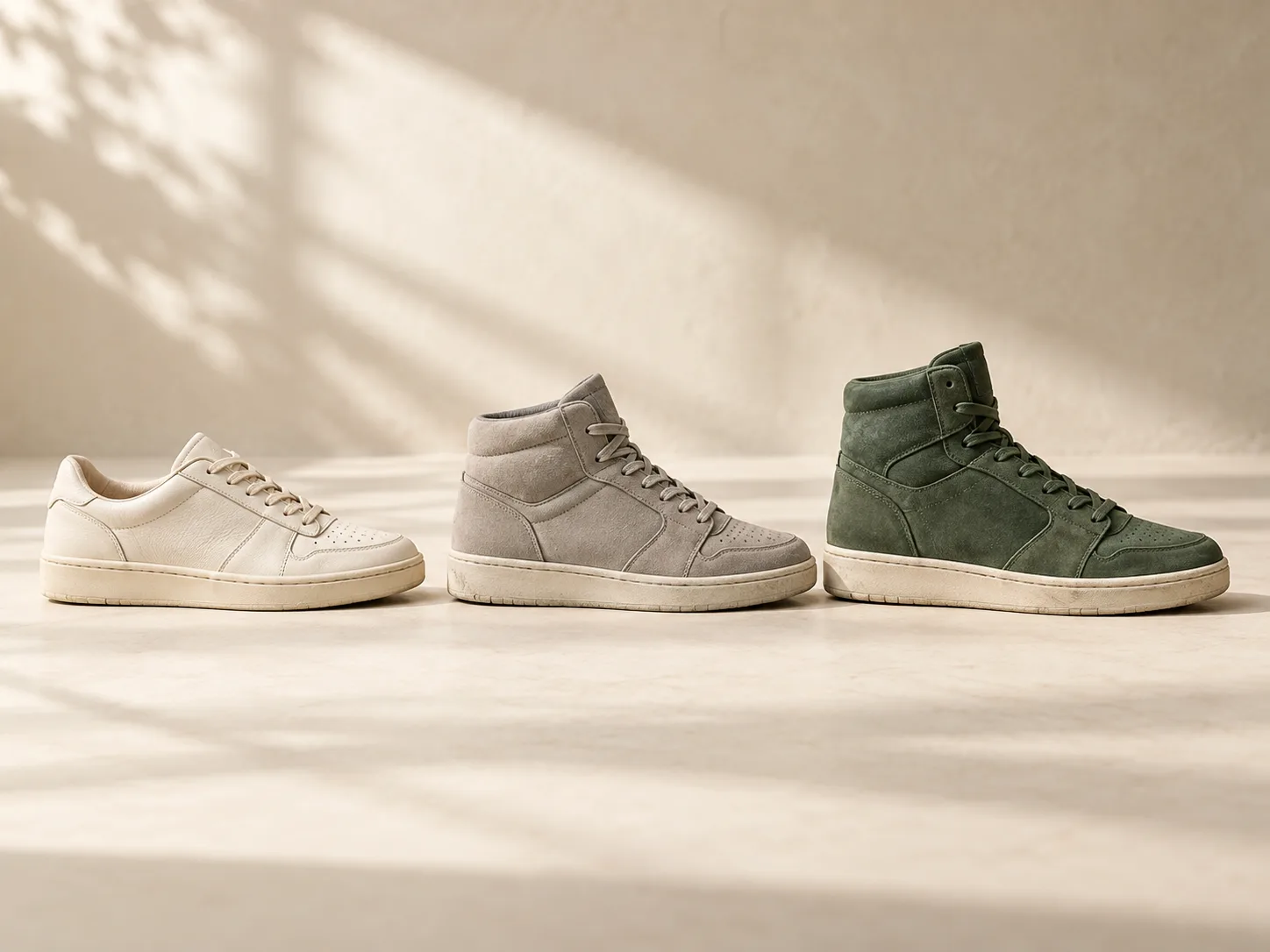
Los tops bajos son fáciles de poner y emparejar con muchas formas trouser.
La respuesta rápida
Elige la altura de las zapatillas según movimiento, ropa y cuánto contacto con el cuello toleras. Las tapas bajas exponen el tobillo, por lo general son fáciles de poner y trabajar con muchos pantalones. Las tapas medias agregan cobertura y una silueta más sustancial pero pueden tocar el hueso del tobillo. Las tapas altas crean el efecto visual más fuerte y pueden sentirse seguras cuando se lance bien, pero tardan más tiempo en ponerse y pueden restringir o frotar si la forma del cuello no se adapta a su pierna. La altura por sí sola no garantiza soporte; la estabilidad única, el tacón de sujeción, lazo y ajuste son más importantes. Compare el relleno de cuello, apertura, peso y su rutina normal de caminar antes de elegir.
Entender donde se sienta cada altura
Las zapatillas de baja altura terminan debajo de los huesos del tobillo y deja el tobillo visualmente abierto. Las tapas medias se elevan cerca o parcialmente sobre los huesos del tobillo, dependiendo del diseño. Los tops altos se extienden por encima de ellos y pueden continuar varios centímetros hasta la pierna inferior. Los nombres de los productos son inconsistentes, por lo que inspeccionar las fotos laterales y pedir la altura del cuello desde el fondo cuando la distinción importa.
La misma altura etiquetada puede sentirse diferente porque las curvas del cuello, la longitud de la lengua y el ancho de apertura varían. Una espalda alta con paneles laterales bajos puede comportarse como una parte superior baja en movimiento. Una parte superior acolchada puede sentirse más voluminosa que una parte superior delgada. Evaluar la forma completa del collar en lugar de confiar en el nombre de la categoría.
Elija tapas bajas para facilitar el acceso y la flexibilidad
Los tops bajos son convenientes para el uso frecuente en y apagado y generalmente permiten que el tobillo se mueva sin contacto con el cuello. Trabajan bien para climas de conmutación, casuales y cálidos cuando la suela y la parte superior encajan en la actividad. El tobillo abierto también se combina fácilmente con pantalones rectos, acolchados y más anchos. Los calcetines siguen siendo visibles, por lo que su altura y color se convierten en parte de la mirada.
El intercambio es menos cobertura de polvo, lluvia ligera y fricción del trouser. Un collar de tacón bajo mal moldeado todavía puede frotar, y una abertura suelta puede permitir la elevación del talón. Revise la copa de talón y lacándose en lugar de asumir que la baja altura significa pobre sujeción. Una tapa baja bien ajustada puede sentirse controlada sin presionar el tobillo.
Las tapas intermedias añaden cobertura visual y física sin la altura completa de una parte superior alta.
Usar las tapas medias como un terreno medio visual y práctico
Las tapas medias crean más presencia que las zapatillas bajas y pueden cubrir el área del tobillo sin extenderse lejos hasta la pierna. Pueden adaptarse a las personas que gustan de un zapato substancial pero no quieren el tiempo o la calidez de una parte superior completa. El collar puede proteger contra el contacto ligero y puede equilibrar visualmente los pantalones más anchos o la ropa con capa.
Debido a que los cuellos medios a menudo se encuentran con el hueso del tobillo, la forma es crítica. Un borde rígido en la altura equivocada puede frotar durante el caminar. Busque el relleno, una abertura curvada o material más suave en los puntos flex. Prueba el zapato con los calcetines que planeas usar. Calcetines muy finos pueden exponer la piel exactamente donde se mueve el cuello.
Elija las tapas altas para la cobertura y una silueta más fuerte
Las tapas superiores envuelven más del tobillo inferior y crean una línea vertical definida. Pueden sentirse seguros cuando el revestimiento distribuye la presión uniformemente y el talón se mantiene correctamente. También proporcionan más superficie para el color, paneles y hardware, haciéndolos una parte visible de un traje. En clima fresco, la cobertura extra puede sentirse cómoda.
Por lo general son más lentos para ponerse y pueden sentirse calientes o pesados. Una abertura estrecha puede ser difícil para un alto paso. La inclinación superior puede restringir el movimiento natural, mientras que la lazo suelto puede permitir que el pie se deslice. La altura no reemplaza una suela estable o el tamaño correcto. Elija las tapas altas porque el ajuste completo y el trabajo rutinario, no porque el collar solo aparece protector.
Verificar la forma del tobillo, el relleno de cuello y la lengua
Siente dónde se sientan los huesos del tobillo en relación con el cuello. Un borde duro directamente contra el hueso es más probable que cause irritación. El relleno puede suavizar el contacto, pero el relleno excesivo reduce el espacio interior y retiene el calor. La lengua debe proteger el frente del tobillo de los cordones sin doblar en un punto de presión. Las lenguas engomadas pueden mejorar la alineación, pero puede hacer que la entrada sea más ajustada.
Las fotos laterales revelan si el collar se inclina, curva o aumenta uniformemente. Un punto trasero más profundo puede reducir la presión de Aquiles. El cuero flexible o la tela pueden adaptarse, pero no se debe esperar que solucione el contacto severo. Al intentar, caminar, girar y usar escaleras cubiertas. La posición estática no reproduce el movimiento del collar.
Los tops altos requieren atención para el confort del cuello, lazo y la interacción del trouser.
Altura de zapatillas con pantalones y calcetines
La parte superior baja deja un descanso entre zapato y pantalones, lo que puede hacer la línea de piernas más ligera. Las tapas medias y altas pueden sentarse debajo de los pantalones anchos o ser visibles con cortes cortados y cónicos. Revise si un trouser estrecho se agarra en el collar y si un timón ancho arrastra hacia la parte superior. La fricción puede marcar materiales ligeros con el tiempo.
Los calcetines influyen en la comodidad y el estilo. Las tapas altas generalmente se benefician de calcetines que se extienden por encima del cuello para reducir el frotamiento. Los calcetines bajos invisibles todavía deben proteger el borde del talón. Elija materiales transpirables adaptados al clima. Un traje visualmente limpio no es útil si la altura del calcetín deja la piel expuesta al contacto repetido.
Considere el peso, el clima y el movimiento diario
Más material superior y hardware pueden añadir peso, aunque la construcción varía. Durante largos días de caminata, compare todo el par en lugar de asumir una parte superior alta es pesado. Los climas cálidos y húmedos pueden favorecer diseños más bajos o más transpirables. Las rutas lluviosas o polvorientas pueden beneficiarse de más cobertura, pero las costuras y los materiales de la zapatilla no son automáticamente impermeables.
Piensa en lo a menudo que quitas los zapatos durante el día. Los altos niveles pueden ser inconvenientes en los controles de seguridad, hogares o lugares de trabajo con cambios frecuentes. Las cremalleras pueden acelerar la entrada pero añadir hardware y puntos de presión potenciales. Una opción práctica encaja en la secuencia real de su día desde el aderezo hasta la conmutación, sentarse, caminar y retirar.
Priorizar el ajuste sobre la etiqueta de altura
Todas las alturas necesitan un espacio adecuado para los pies, la anchura correcta de los pies, la sujeción segura del talón y el lazo equilibrado. Revise que el pie dobla donde la suela está diseñada para flex. Una parte superior más larga no corrige un zapato demasiado ancho en el talón, y una tapa baja no es automáticamente más flexible si la suela es rígida. Evaluar cada construcción por su cuenta.
Al comprar en línea, compare las mediciones de pie con el gráfico exacto, inspeccione el collar y abra fotos y solicite un vídeo si la entrada se ve estrecha. Mantenga las expectativas realistas sobre el allanamiento. El suavizado de superficie menor puede ocurrir, pero la presión del tobillo afilada, la compresión de los pies y el movimiento inestable del talón son razones para reconsiderar el tamaño o la forma.
Preguntas frecuentes
¿Las zapatillas de alta altura proporcionan más apoyo al tobillo?
La altura por sí sola no establece un apoyo significativo. Fit, lacing, estabilidad única y diseño previsto importan más.
¿Son las tapas medias adecuadas para el clima cálido?
Pueden ser, dependiendo del revestimiento y el material superior, pero la cobertura extra de collar generalmente conserva más calor que una parte superior baja.
¿Qué calcetines funcionan con tapas altas?
Los calcetines que se extienden por encima del cuello generalmente reducen el frotamiento directo. Elija el espesor que coincida con el volumen del zapato.
¿Puede la gente corta usar zapatillas de alta altura?
Sí. La proporción depende de la forma del trouser, el contraste de color y el zapato específico, no la altura sola.
Guías relacionadas
¿Cómo debe ser el cuero Sneakers Fit?
Zapatillas de cuero, sueda o tela
Guías de calzado
¿Necesitas ayuda para comparar un artículo?
Revise las mediciones, los materiales y el uso previsto antes de ordenar. Para preguntas específicas del producto, contacte con ORBUYBAG y solicite fotos claras, dimensiones y un vídeo breve.
Guía revisada: compruebe la pieza, el presupuesto y las condiciones del servicio antes de comprar.