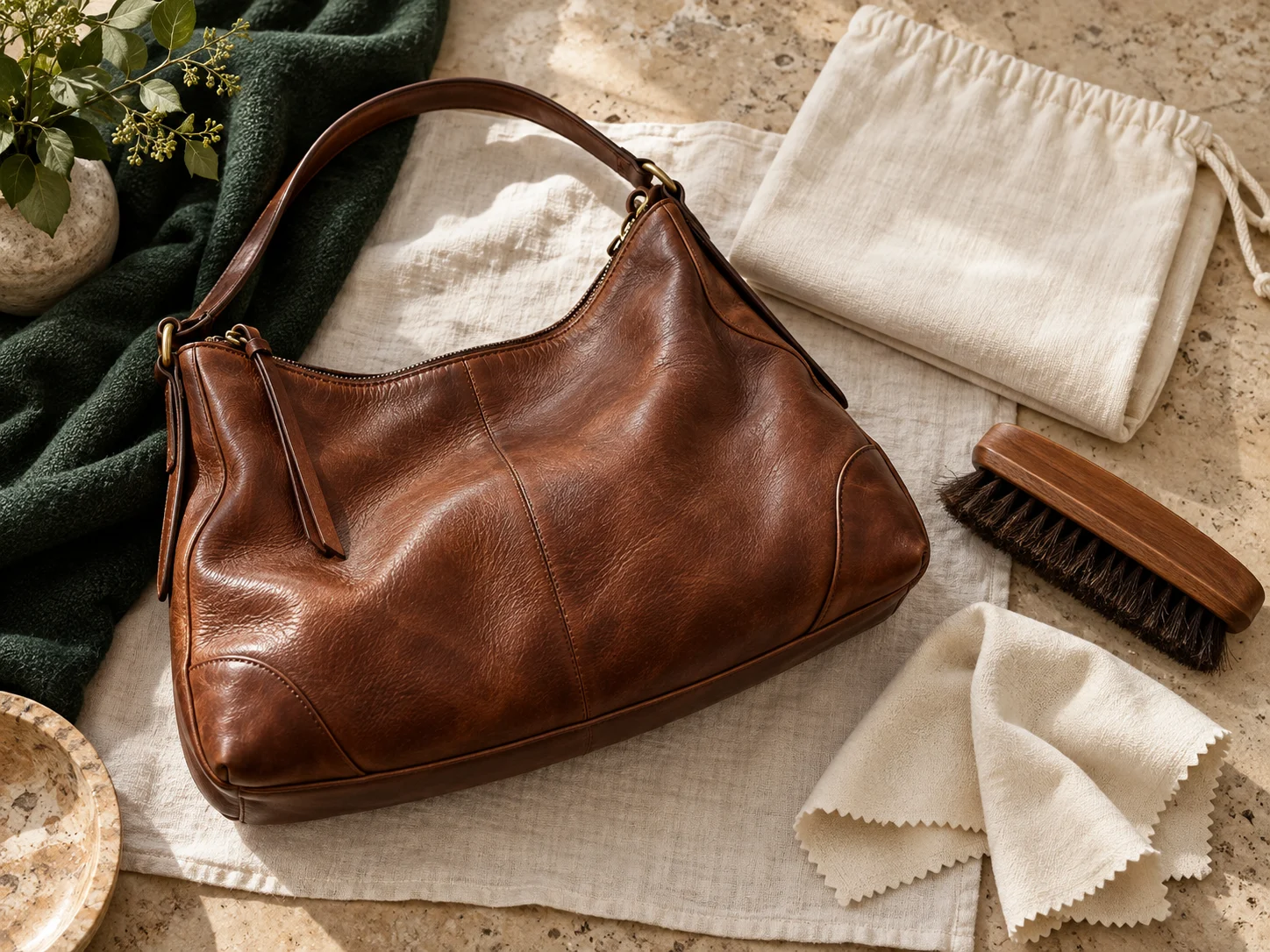
Identifizieren Sie das Leder und Finish, bevor Sie ein Produkt auftragen.
Die schnelle Antwort
Eine sichere Pflegeroutine für Lederbeutel ist einfach: Entleeren und inspizieren Sie den Beutel, entfernen Sie losen trockenen Staub mit einem sauberen weichen Tuch, richten Sie kleine Markierungen sofort mit der am wenigsten aggressiven materialkompatiblen Methode an, lassen Sie den Beutel natürlich trocknen und lagern Sie ihn in einer atmungsaktiven Abdeckung mit leichter Formunterstützung. Verwenden Sie keinen Alkohol, Desinfektionstücher, Parfüm, Nagellack, Speiseöle, starke Reinigungsmittel oder direkte Hitze. Testen Sie jeden Reiniger oder Conditioner an einem versteckten Bereich und stoppen Sie, wenn sich Farbe, Glanz oder Textur ändern.
Identifizieren Sie das Material vor der Reinigung
Leder ist keine einheitliche Oberfläche. Glattes Kalbsfell, Narbenleder, Lämmerfell, Wildleder, Nubuck, Lackierungen und beschichtete Materialien reagieren unterschiedlich. Ein Produkt, das für einen geeignet ist, kann das Finish verdunkeln, abflachen oder von einem anderen entfernen. Überprüfen Sie die Artikelbeschreibung, Pflegekarte und Verkäuferanleitung. Wenn das Material unsicher ist, beschränken Sie die routinemäßige Pflege auf eine sanfte Trockenstaubentfernung und suchen Sie qualifizierten Rat für Flecken.
Identifizieren Sie auch Trimm, Auskleidung, Randfarbe und Hardware. Ein Beutel kann mehrere Materialien kombinieren, und Flüssigkeit, die auf einer Platte platziert wird, kann in eine andere migrieren. Die sicherste Methode wird durch den empfindlichsten Bereich bestimmt. Behandeln Sie niemals eine ganze Tasche mit einem Produkt, das nur auf einem kleinen glatten Abschnitt basiert.
Inspektion vor jeder Pflegesitzung
Alle Taschen leeren und gegebenenfalls abnehmbare Gurte entfernen. Schauen Sie sich Ecken, Griffe, Basis, Öffnung, Auskleidung und Hardware unter neutralem Licht an. Notieren Sie Kratzer, Farbübertragung, Feuchtigkeit, lose Nähte oder Veränderungen in der Textur. Geruch kann feuchte Lagerung offenbaren, bevor sichtbare Schimmel erscheint. Fotografieren Sie ein Problem vor der Behandlung, damit jede Änderung verglichen werden kann.
Routinepflege sollte nicht zu einer häufigen Produktanwendung werden. Leder kann durch wiederholtes Reiben, überschüssige Feuchtigkeit und inkompatible Conditioner beschädigt werden. Wenn der Beutel sauber und stabil ist, können Inspektion und Trockenstäubung ausreichen. Intervenieren Sie nur, wenn es einen klaren Bedarf gibt.
Routinepflege beginnt mit trockener Inspektion und minimalem Eingriff.
losen Staub vorsichtig entfernen
Verwenden Sie ein sauberes, trockenes, weiches, nicht gefärbtes Tuch. Leicht abwischen, ohne Schmutz in Körner oder Nähte zu pressen. Für texturiertes Leder folgen Sie dem Korn, anstatt in Kreisen zu schrubben. Eine sehr weiche Bürste kann für einige Wildleder- oder Stoffoberflächen geeignet sein, aber nur, wenn sie für dieses Material empfohlen wird. Halten Sie separate Tücher für helle und dunkle Gegenstände, um die Farbübertragung zu reduzieren.
Achten Sie auf Griff Basen, Rohrleitungen und unter Klappen, wo sich Staub sammelt. Verwenden Sie keine Vakuumdüse direkt auf empfindlichen Oberflächen. Vermeiden Sie Papierhandtücher mit rauer Textur und Haushaltsstaubprodukte, die Duftstoffe, Öl oder Reinigungsmittel enthalten.
Verwenden Sie Feuchtigkeit nur, wenn das Material es erlaubt
Einige fertige glatte Leder tolerieren ein kaum feuchtes Tuch für eine kleine Oberflächenmarke, aber das Tuch sollte nicht nass sein und der Bereich sollte nicht getränkt werden. Verwenden Sie sauberes Wasser, arbeiten Sie zuerst an einem versteckten Testbereich und tupfen Sie statt zu schrubben. Federn Sie die Grenze sanft, um eine harte Wasserlinie zu reduzieren. Lassen Sie die natürliche Trocknung zu, bevor Sie das Ergebnis beurteilen.
Wildleder, Nubuck, unfertiges Leder und zarte helle Oberflächen können stark auf Wasser reagieren. Patentartige Oberflächen können auch aus ungeeigneten Tüchern oder Reinigern markieren. Wenn Sie Zweifel haben, hören Sie auf. Eine kleine unbehandelte Markierung ist für einen Fachmann oft leichter zu adressieren als ein großer Bereich, der durch die Behandlung zu Hause verändert wurde.
Zustand nur bei Bedarf
Conditioner ist keine universelle Anforderung. Einige Leder sind fertig oder beschichtet in einer Weise, die Absorption begrenzen, während sehr weiches oder blasses Leder dunkler werden kann. Verwenden Sie nur ein Produkt, das für das genaue Material bestimmt ist, und tragen Sie eine minimale Menge nach einem verdeckten Test auf. Beobachten Sie den Test auf Farbe, Glanz, Klebrigkeit und Textur, nachdem er sich vollständig beruhigt hat.
Verwenden Sie kein Speiseöl, Körperlotion, Vaseline oder improvisierte Mischungen. Diese können oxidieren, Schmutz anziehen, in Futter wandern oder die Farbe dauerhaft verändern. Mehr Conditioner bedeutet nicht mehr Schutz. Überanwendung kann die Struktur erweichen und Rückstände hinterlassen.
Saubere, trockene und leicht unterstützte Lagerung reduziert vermeidbare Verformungen.
Griff Flecken nach der Quelle
Trockenstaub, Wasser, Öl, Tinte, Kosmetik und Farbstoffübertragung erfordern unterschiedliche Reaktionen. Reiben Sie keinen unbekannten Fleck. Frisches sauberes Wasser mit einem saugfähigen weißen Tuch aufblasen und natürliche Trocknung ermöglichen. Für Öl, Tinte, schwere Farbstoffübertragung oder alte Markierungen isolieren Sie die Tasche und suchen Sie materialspezifische professionelle Pflege. Fleckenentferner für den Haushalt können Farbe verbreiten oder die Oberflächenoberfläche entfernen.
Vermeiden Sie Alkohol, Händedesinfektionsmittel und desinfizierende Tücher. Sie können Beschichtungen auflösen und Leder trocknen oder verfärben. Klarer Nagellack sollte niemals auf Hardware oder Randbereichen verwendet werden; es kann gelb, riss und auf benachbartes Material übertragen werden. Parfüm- und Aerosolprodukte sollten vom Beutel weg aufgetragen werden.
Pflege von Griffen, Ecken und Hardware
Griffe absorbieren Hautöle und erhalten wiederholte Reibung. Halten Sie die Hände sauber und vermeiden Sie es, Handcreme unmittelbar vor dem Tragen von blassem Leder aufzutragen. Drehen Sie die Tragpositionen, wenn das Design es zulässt, und vermeiden Sie das Aufhängen eines beladenen Beutels mit einem Handgriff. Ecken tragen schneller, wenn die Tasche auf raue Oberflächen gelegt wird, also verwenden Sie ein sauberes Regal oder einen Haken, der entworfen wurde, um die volle Tasche anstelle des Riemens zu unterstützen.
Wischen Sie die Hardware nach Gebrauch mit einem trockenen weichen Tuch ab. Polieren Sie keine überzogene Hardware aggressiv oder tragen Sie Haushaltsmetallreiniger auf. Schützen Sie Ketten vor dem Einpressen in Leder während der Lagerung, indem Sie sie in sauberes weiches Material einwickeln. Wenn die Hardware Korrosion, lose Beschichtung oder scharfe Kanten aufweist, suchen Sie nach einer professionellen Reparatur, anstatt sie zu Hause zu beschichten.
Trocknen Sie natürlich und kontrollieren Sie die Umwelt
Nach leichter Feuchtigkeit oder Reinigung halten Sie den Beutel in einem schattigen, belüfteten Innenbereich offen. Entfernen Sie feuchten Inhalt und lassen Sie die Taschen lüften. Verwenden Sie keinen Haartrockner, Heizkörper, starken Luftentfeuchterauslass oder direktes Sonnenlicht. Schnelle Hitze kann Leder versteifen, die Farbe ändern und Klebstoffe beeinflussen. Bewahren Sie den Beutel nicht auf, bis das Futter und die Nähte vollständig trocken sind.
Die Langzeitpflege hängt stark vom Raum ab. Vermeiden Sie feuchte Wände, Badezimmerlagerung und versiegelten Kunststoff. Verwenden Sie einen moderaten Luftstrom und überwachen Sie die Feuchtigkeit während der Regenzeit. Desiccant kann eine kontrollierte Garderobe unterstützen, wenn sie gemäß den Anweisungen verwendet wird, aber es ersetzt nicht eine trockene Umgebung und regelmäßige Inspektion.
Speichern mit atmungsaktivem Schutz und Lichtunterstützung
Verwenden Sie einen sauberen atmungsaktiven Staubbeutel. Füllen Sie den Innenraum leicht mit säurefreiem Gewebe, sauberem unbedrucktem Papier oder einem geeigneten Einsatz. Zwingen Sie keine Ecken nach außen oder strecken Sie den Reißverschluss nicht. Befestigen Sie Verschlüsse lose genug, um die Ausrichtung ohne Druck zu erhalten. Legen Sie die Tasche aufrecht, wenn ihre Konstruktion diese Position unterstützt und Raum zwischen den Gegenständen lässt.
Hängen Sie eine schwere Tasche nicht lange auf, da sich Griffe und Befestigungspunkte dehnen können. Halten Sie Ketten und Riemen so angeordnet, dass sie keine Eindrücke hinterlassen. Vermeiden Sie Zeitungs-, farbige Stoff- und Plastiktüten, die Tinte, Farbstoff oder Feuchtigkeit übertragen können. Inspizieren Sie die Tasche regelmäßig, anstatt sie für eine ganze Saison unberührt zu lassen.
Erstellen Sie einen realistischen Wartungsplan
Nach Gebrauch Müll entfernen und auf Feuchtigkeit prüfen. Wöchentlich oder nach mehreren Abnutzungen, wischen Sie losen Staub und überprüfen Sie Griffe und Ecken. Monatlich bei feuchtem Wetter, überprüfen Sie die Lagerbedingungen und lüften Sie den Kleiderschrank. Die Produktanwendung sollte auf Materialzustand und Herstelleranleitung basieren, nicht auf einem festen wöchentlichen Zeitplan.
Halten Sie eine einfache Aufzeichnung für wertvolle oder empfindliche Stücke: Material, letzte Inspektion, getestete Produkte und Reparaturen. Dies verhindert das versehentliche Mischen von inkompatiblen Produkten und hilft einem Fachmann, die vorherige Behandlung zu verstehen, wenn sich ein Problem entwickelt.
Häufig gestellte Fragen
Kann ich Alkoholtücher auf einer Ledertasche verwenden?
Nein. Alkohol und desinfizierende Tücher können das Finish entfernen, die Oberfläche trocknen oder Verfärbungen verursachen.
Wie oft sollte ich Leder konditionieren?
Es gibt keinen universellen Zeitplan. Zustand nur, wenn das genaue Leder und Finish kompatibel sind und die Tasche es tatsächlich braucht.
Kann ich Babytücher verwenden?
Sie können Alkohol, Duftstoffe, Tenside oder Feuchthaltemittel enthalten, die für Leder ungeeignet sind. Verwenden Sie stattdessen materialspezifische Anleitungen.
Was soll ich mit einem unbekannten Fleck tun?
Schrubben oder experimentieren Sie nicht. Fotografieren Sie es, isolieren Sie die Tasche und suchen Sie Rat von einem Reiniger mit dem spezifischen Material erfahren.
In Verbindung stehende Leitfäden
Feuchte Wettertüten
Handtasche Pflege & Lagerung
Handtaschenführer
Brauchen Sie Hilfe beim Vergleich eines Artikels?
Überprüfen Sie die Messungen, Materialien und den Verwendungszweck vor der Bestellung. Bei produktspezifischen Fragen wenden Sie sich an den ORBUYBAG-Support und fordern klare Fotos, Abmessungen und ein kurzes Detailvideo an.
Related Care Guide
Kleinere Lederstücke sind mit den gleichen Risiken wie Handtaschen konfrontiert. Weiter mit Wie man sich um Gürtel, Geldbörsen und kleines Lederzubehör kümmert, um praktische Anleitungen zur Verringerung von Reibung, Überfüllung, Feuchtigkeit und wiederholtem Stress zu erhalten.
Überarbeiteter Ratgeber: Prüfen Sie Artikel, Angebot und Leistungsbedingungen vor dem Kauf.