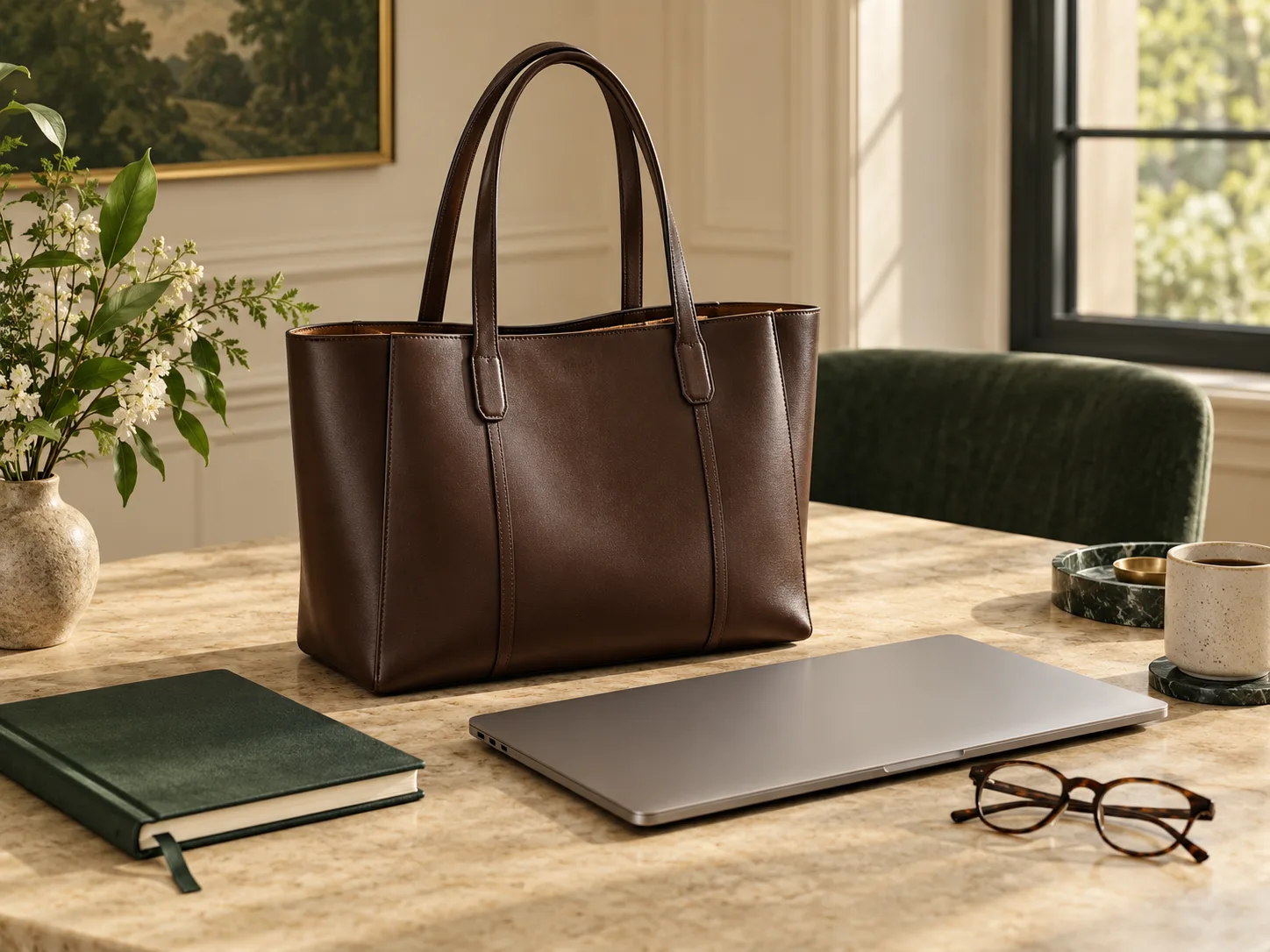
Eine Arbeitstasche sollte eine polierte Silhouette mit realistischer Tageskapazität ausgleichen.
Die schnelle Antwort
Die beste Arbeitstasche ist groß genug für Ihren tatsächlichen Arbeitstag, nicht jeder Gegenstand, den Sie möglicherweise tragen. Beginnen Sie mit den Abmessungen Ihres Laptops, Dokumenten, Ladegerät, Wasserflasche und persönlichen Dingen. Vergleichen Sie dann die Öffnung, den Boden, die Tiefe, die Gurtbreite und das leere Gewicht der Tasche. Eine raffinierte Arbeitstasche sieht normalerweise sauber aus, wenn sie teilweise gefüllt ist, schließt ohne Belastung und hält schwere Gegenstände in der Nähe des Zentrums. Für die meisten Büroroutinen bietet eine mittelstrukturierte Handtasche mit einem sicheren Verschluss, einer stabilen Basis und einem optionalen Schultergurt das nützlichste Gleichgewicht.
Definieren Sie den Arbeitstag, bevor Sie die Tasche auswählen
Eine Arbeitstasche sollte der Art und Weise entsprechen, wie Sie sich durch den Tag bewegen. Jemand, der direkt zu einem Schreibtisch fährt, kann eine polierte Form und einen einfachen Zugang priorisieren. Ein Pendler, der geht, Züge wechselt oder in Warteschlangen steht, braucht einen sicheren Verschluss, ausgewogene Gurte und ein geringeres Leergewicht. Ein Hybridarbeiter kann einen Laptop nur an bestimmten Tagen tragen, während eine dem Kunden zugewandte Rolle Dokumente, Muster oder eine zweite Brille erfordern kann. Listen Sie die Gegenstände auf, die an einem normalen Tag verwendet werden und die nur gelegentlich getragen werden. Dies verhindert einen überdimensionierten Kauf basierend auf dem verkehrsreichsten Tag des Jahres.
Trennen Sie die Ladung in drei Gruppen: Arbeitsmittel, persönliches Wesentliches und optionale Extras. Zu den Arbeitsmitteln gehören Laptop, Tablet, Notebook, Kabel und Dokumente. Zu den persönlichen Grundlagen gehören das Telefon, die Brieftasche, Schlüssel, Taschentücher und ein kleiner Beutel. Optionale Extras können eine Flasche, einen Regenschirm, Kosmetika, Snacks oder eine Lichtschicht umfassen. Die Tasche sollte die ersten beiden Gruppen bequem handhaben und nur begrenzten Platz für ein oder zwei Extras haben. Zu viel ungenutzter Platz fördert das Überpacken und lässt eine raffinierte Tasche schwer oder verzerrt aussehen.
Messen Sie den Laptop und die Öffnung, nicht nur die Außenseite
Laptop-Kompatibilität ist der erste praktische Test. Messen Sie das Gerät selbst, einschließlich aller Hülsen, die Sie verwenden möchten. Vergleichen Sie diese Messungen mit dem nutzbaren Innenraum, nicht nur der äußeren Breite und Höhe des Beutels. Eine umrahmte Öffnung, nach innen faltbare Seiten oder dicke Auskleidung kann den Nutzraum verkleinern. Eine Tasche, die technisch breiter als der Laptop ist, kann immer noch schwierig zu laden sein, wenn der Reißverschluss kurz oder die Oberseite schmal ist. Fragen Sie nach einem Foto oder Video, das die Eröffnung mit einem Lineal zeigt, wenn die Produktbeschreibung unklar ist.
Auch die Orientierung ist wichtig. Ein horizontaler Laptop passt möglicherweise zu einem breiten Tote, erzeugt jedoch Druck auf die Ecken. Ein vertikales Fach kann dazu führen, dass sich eine hohe Tasche leichter zu tragen anfühlt, obwohl das Gerät hoch sitzen kann. Lassen Sie einen kleinen Rand um die Hülse, damit der Verschluss den Laptoprand nicht reibt. Zwingen Sie ein starres Gerät nicht in eine weiche Tasche, die sich scharf um sie herum biegt. Wiederholter Druck kann die Öffnung dehnen und die Silhouette des Beutels verändern.
Überprüfen Sie die Öffnung, Fächer und Basis, bevor Sie die Kapazität von Außenfotos beurteilen.
Wählen Sie die Struktur entsprechend der Last
Eine strukturierte Tasche hält einen sauberen Umriss und hilft den Dokumenten, flach zu bleiben, aber die Struktur fügt Gewicht hinzu. Es kann auch die Flexibilität beim Verpacken unregelmäßiger Artikel verringern. Eine halbstrukturierte Tasche ist oft die verzeihendste Wahl für die Arbeit, weil sie einigermaßen gut steht und gleichzeitig Bewegung ermöglicht. Eine sehr weiche Tote kann sich leicht und lässig anfühlen, aber schwere Gegenstände können sich unten sammeln und eine abgerundete Form erzeugen. Die richtige Wahl hängt davon ab, ob Optik, Leichtigkeit oder flexible Kapazität am wichtigsten sind.
Schauen Sie sich die Basis genau an. Eine stabile Basis verteilt das Gewicht und hält die Tasche aufrecht, wenn sie neben einem Schreibtisch platziert wird. Verstärkte Ecken helfen, wenn ein Laptop oder eine Flasche regelmäßig getragen wird. Eine völlig starre Basis kann sich gegen die Hüfte sperrig anfühlen, während eine Basis ohne Unterstützung durchhängen kann. Produktfotos sollten den Beutel leer, leicht gefüllt und von der Seite betrachtet zeigen. Diese Winkel zeigen, ob die Struktur aus dem Material, einer internen Platine oder temporären Füllungen für die Fotografie stammt.
Bewerten Sie die Gurte mit voll beladenem Beutel
Ein Gurt, der sich auf einer leeren Tasche wohlfühlt, kann unangenehm werden, nachdem ein Laptop und eine Flasche hinzugefügt wurden. Breitere Riemen verteilen normalerweise den Druck besser als schmale Riemen oder Ketten. Überprüfen Sie, ob der Tropfen lang genug ist, um über einen Mantel zu passen und ob die Griffe flach bleiben, anstatt sich zu drehen. Wenn die Tasche einen abnehmbaren Schultergurt enthält, bestätigen Sie, dass die Befestigungspunkte so positioniert sind, dass die Tasche in der Höhe hängt, anstatt nach vorne zu kippen.
Leeres Gewicht ist leicht zu übersehen. Hardware, dickes Leder, eine verstärkte Basis und mehrere Fächer können dazu führen, dass sich eine Tasche erheblich anfühlt, bevor etwas gepackt wird. Fügen Sie das ungefähre Gewicht Ihrer normalen Last hinzu und überlegen Sie, wie lange Sie sie tragen werden. Für einen Wanderweg kann eine leichtere halbstrukturierte Tasche mit einem breiten Riemen in der Praxis verfeinert sein als ein schönes, aber schweres Design, das ständig von Schulter zu Hand verschoben wird.
Verwenden Sie Organisation, um Masse zu reduzieren, nicht erstellen
Eine nützliche Organisation sollte die Verwendung der Tasche erleichtern, ohne zu viel Innenraum zu verbrauchen. Ein gepolsterter Abschnitt, eine gezippte Tasche und zwei kleine offene Taschen sind genug für viele Menschen. Zu viele Trennwände können die Kapazität einschränken und es schwierig machen, einen größeren Beutel oder Lunchbehälter zu tragen. Überprüfen Sie, ob der Trenner die Basis erreicht; ein schwimmender Trenner kann es kleinen Objekten ermöglichen, sich darunter zu bewegen und schwer wiederzufinden.
Ein abnehmbarer Organisator kann in einem einfachen Tote hilfreich sein, insbesondere beim Wechseln von Taschen. Wählen Sie eine, die etwas kleiner als der Innenraum ist, so dass sie nicht gegen die Seiten drückt. Halten Sie die schwersten Objekte in der Nähe des Zentrums und der Körperseite. Platzieren Sie Schlüssel, Zugangskarten und das Telefon in speziellen Taschen, damit das Hauptfach nicht wiederholt an überfüllten Orten geöffnet werden muss. Gute Organisation sollte das Suchen und Überpacken reduzieren, nicht die Tasche in einen Aktenschrank verwandeln.
Der Komfort hängt vom belasteten Gewicht, dem Gurtdesign und davon ab, wie sich die Tasche am Körper befindet.
Suchen Sie nach einer Schließung, die zu Ihrer Umgebung passt
Ein offenes Tote bietet Geschwindigkeit am Schreibtisch, bietet aber wenig Schutz in öffentlichen Verkehrsmitteln oder bei schlechtem Wetter. Ein voller Reißverschluss ist sicher, obwohl er die Öffnung verengen kann. Eine Klappe oder ein Turn-Lock sieht poliert aus und kann für eine Car-to-Office-Routine ausreichen. Ein magnetischer Verschluss ist bequem, sollte aber nicht als vollständig sicher behandelt werden, wenn der Beutel auf den Boden oder über Kopf gestellt wird. Passen Sie den Verschluss an die Stellen an, an denen der Beutel tatsächlich verwendet wird.
Untersuchen Sie, wie sich der Verschluss verhält, wenn der Beutel teilweise voll ist. Ein Reißverschluss sollte sich bewegen, ohne die Seiten nach innen zu ziehen. Eine Klappe sollte flach liegen, anstatt über eine Laptop-Hülle zu heben. Wenn ein Beutel gefüllt werden muss, bis der Verschluss unter Spannung steht, ist die Kapazität für die Routine zu gering. Eine raffinierte Arbeitstasche sieht absichtlich aus, wenn sie geschlossen ist; gestreckte Nähte und eine angehobene Klappe lassen sogar ein elegantes Design überlastet erscheinen.
Wählen Sie Material und Farbe für die wiederholte Verwendung
Glattes Leder kann formal aussehen, kann aber schnell Kratzer und Druckspuren zeigen. Kornleder ist oft verzeihender für häufiges Pendeln. Beschichtete Leinwand kann Gewicht reduzieren und leichte Oberflächenfeuchtigkeit handhaben, während Stoff sich entspannt und leicht zu tragen anfühlt, aber mehr Aufmerksamkeit auf Regen und Verschüttungen erfordert. Materialnamen allein reichen nicht aus. Fragen Sie nach Finish, Steifigkeit, Auskleidung und Kantenkonstruktion, da diese Details sowohl das Aussehen als auch die Wartung beeinflussen.
Neutrale Farben sind praktisch, aber die beste Neutralität hängt von der Garderobe ab. Schwarz ist formal und leicht zu koordinieren, obwohl Staub auf einigen Oberflächen sichtbar sein kann. Dunkelbraun und Taupe weich geschnittene Kleidung. Beige kann hell und raffiniert aussehen, braucht aber mehr Sorgfalt um Denim-Farbstoff und öffentliche Oberflächen. Eine tiefe Marine, Burgund oder Olive kann als neutral fungieren, während sie Unterscheidung hinzufügt. Wählen Sie eine Farbe, die mit den meisten Mänteln und Schuhen funktioniert, anstatt nur ein ideales Outfit.
Überprüfen Sie Online-Fotos wie ein Käufer, nicht ein Browser
Vor der Bestellung, fordern Sie Front-, Seiten-, Basis-, Öffnungs- und Innenfotos an. Fragen Sie nach einem kurzen Video, das den Verschluss, den Grifftropfen und ein gemeinsames Objekt wie ein Notizbuch zeigt. Bestätigen Sie Messungen in Zentimetern und fragen Sie, ob sie an der breitesten Stelle oder an der Basis durchgeführt werden. Ein Modellfoto kann bei der Skalierung helfen, aber Kameraabstand und Styling können eine Tasche größer oder kleiner aussehen lassen. Messungen und Öffnungsform sind zuverlässiger als der visuelle Eindruck allein.
Überprüfen Sie die Befestigungspunkte, Nähen um Griffe, Ecken, Randfarbe und Hardwareausrichtung. Diese Bereiche erhalten wiederholte Belastung in einer Arbeitstasche. Bestätigen Sie auch, ob der Beutel bei leichtem Füllen stehen kann und ob der Schultergurt verstellbar ist. Wenn das Produkt einen Laptop trägt, fordern Sie die Bestätigung an, dass das vorgesehene Gerät durch die Öffnung passt, nicht nur, dass die Außenbreite ausreichend ist.
Häufige Work-Bag-Fehler zu vermeiden
Der häufigste Fehler ist der Kauf für maximale Kapazität. Ein sehr großer Tote kann eher zu einem Speicherplatz als zu einem täglichen Werkzeug werden. Ein weiterer Fehler ist die Wahl schmaler Griffe für eine schwere Last oder die Annahme, dass ein Laptop-Fach automatisch in jedes Gerät passt. Einige Käufer priorisieren die Anzahl der Taschen und übersehen leeres Gewicht. Andere wählen eine blasse Farbe, ohne dunkle Mäntel, Denim oder öffentliche Verkehrsmittel zu berücksichtigen.
Vermeiden Sie die Beurteilung der Qualität nur durch Steifigkeit. Eine sehr starre Tasche kann auf Fotos beeindruckend aussehen, fühlt sich aber während eines langen Pendelns unangenehm an. Vermeiden Sie es, den Komfort nur durch das Vorhandensein eines Schultergurts zu beurteilen; Gurtbreite, Befestigungsposition und Gleichgewicht sind wichtiger. Gehen Sie schließlich nicht davon aus, dass eine Arbeitstasche streng aussehen muss. Saubere Proportionen, geeignetes Material und eine kontrollierte Ladung erzeugen in der Regel ein raffinierteres Ergebnis als übermäßige Hardware oder formale Details.
Häufig gestellte Fragen
Welche Größe der Arbeitstasche ist am vielseitigsten?
Eine mittlere Tasche, die zum normalen Laptop oder Tablet passt, Dokumente und Alltagsnotwendigkeiten mit einer kleinen Menge an freiem Raum ist für viele Routinen am vielseitigsten. Verwenden Sie genaue Messungen, da die Etiketten der Verkäufergröße variieren.
Sollte eine Arbeitstasche ein Laptopfach haben?
Ein gepolstertes Fach ist nützlich, wenn das Gerät häufig getragen wird, aber eine separate Hülle kann in einem einfacheren Tote arbeiten. Die Öffnung, die Basisstütze und das Gesamtbelastungsgewicht sind ebenso wichtig.
Ist ein Tote oder Crossbody besser zum Pendeln?
Ein Tote bietet einen einfacheren Zugriff und eine leichtere Dokumentenkapazität. Ein Kreuzkörper oder eine Tasche mit einem abnehmbaren langen Riemen bietet eine bessere Freisprechbewegung. Viele Pendler profitieren von einem strukturierten Tote mit beiden Griff und Schulter Optionen.
Wie kann ich eine Arbeitstasche raffiniert aussehen lassen?
Tragen Sie nur die normale Ladung, verwenden Sie kleine Beutel, vermeiden Sie es, den Verschluss zu dehnen, wischen Sie trockenen Oberflächenstaub weg und lagern Sie den Beutel, wenn er nicht verwendet wird.
In Verbindung stehende Leitfäden
Handtaschengrößenführer
Tote, Schulter oder Crossbody?
Handtaschenführer
Brauchen Sie Hilfe beim Vergleich eines Artikels?
Überprüfen Sie die Messungen, Materialien und den Verwendungszweck vor der Bestellung. Bei produktspezifischen Fragen wenden Sie sich an den ORBUYBAG-Support und fordern klare Fotos, Abmessungen und ein kurzes Detailvideo an.
Überarbeiteter Ratgeber: Prüfen Sie Artikel, Angebot und Leistungsbedingungen vor dem Kauf.