岚奢包

+85294438892

探索全球精选时尚单品,演绎您的独特品味

鞋履护理与收纳

How to Store Leather and Suede Shoes in Humid Weather

05 Aug, 2026    /    浏览量:

How to Store Leather and Suede Shoes in Humid Weather

How to Store Leather and Suede Shoes in Humid Weather(数字1)
Storage begins only after the upper, lining, seams and sole are fully dry.

The quick answer

Before storing leather or suede shoes in humid weather, remove surface dirt, take out removable insoles when appropriate and allow every layer to dry naturally in shade with airflow. Support the toe lightly with clean breathable paper or suitable shoe trees, then place the pair in breathable bags or a ventilated cabinet with space around it. Control the room rather than sealing each shoe in plastic. Keep footwear away from exterior walls, bathrooms and direct air-conditioner drips. Inspect regularly for odor, damp lining, spotting or changes in texture. Do not apply heat, strong disinfectants or unverified household treatments when moisture problems appear.

Dry the entire shoe, not only the surface

A shoe can feel dry outside while the lining, insole, seams and sole remain damp. Remove laces and removable insoles when the construction and instructions permit. Open the tongue and loosen straps so air can move through the interior. Blot surface moisture with a clean absorbent white cloth rather than rubbing.

Place the shoes in shade at room temperature with gentle airflow. Keep them away from direct sun, radiators, hair dryers and hot vehicles. Heat can shrink leather, stiffen suede, warp soles and affect adhesives. Replace damp absorbent paper in the toe as needed, using only clean unprinted material that does not transfer dye.

Remove dirt before longer storage

Dry mud should normally be allowed to dry before gentle removal. Use a clean material-appropriate brush for suede and a soft cloth for smooth leather. Clean soles separately so dirty moisture does not move onto the upper. Avoid soaking the entire shoe and keep liquid away from seams unless the care method specifically requires it.

Do not store shoes with food, oil, grass or cosmetic residue. Organic residue and trapped dust can hold moisture and create odor. Use the least aggressive method suitable for the material and stop if color appears on the cloth. Serious stains or material changes may require professional assessment before storage.

How to Store Leather and Suede Shoes in Humid Weather(数字2)
Breathable support helps preserve shape without trapping moisture.

Support shape without blocking airflow

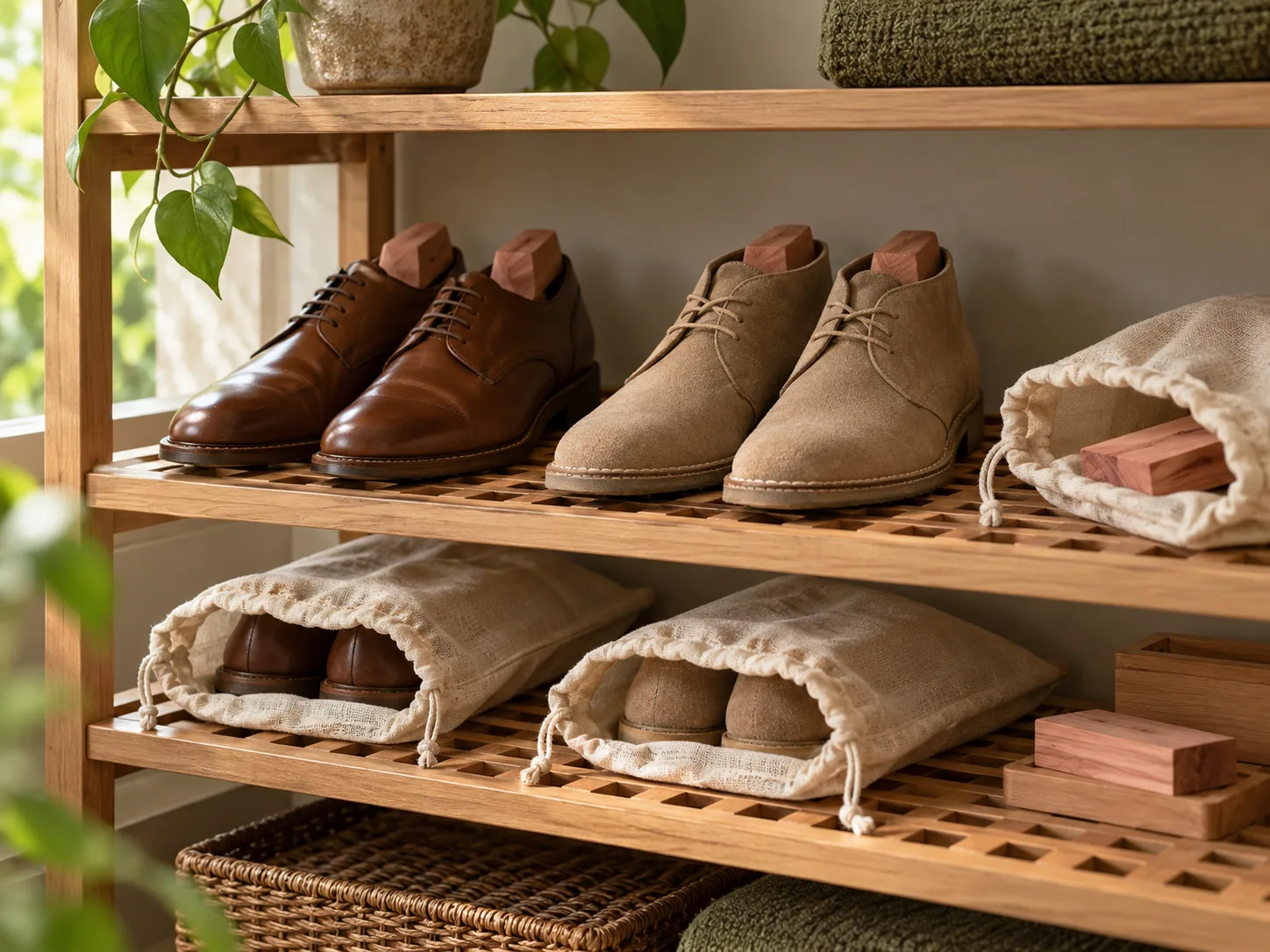
Light toe support helps prevent creasing and collapse. Clean unprinted paper is useful for temporary drying and storage when changed regularly. Suitable shoe trees can support some leather shoes, but they should not stretch the upper. Suede and soft sneakers may need gentler support that matches the natural shape.

Do not pack the shoe tightly or fill it with plastic. Overstuffing places pressure on the toe, stitching and glued joints. Heavy forms can distort soft soles. The goal is to maintain shape while leaving the lining and opening exposed to air. Keep pairs separated enough that one shoe does not press against the other's upper.

Choose breathable storage

Breathable shoe bags and clean ventilated boxes protect from dust while allowing gradual air exchange. Sealed plastic traps residual moisture and makes regular inspection difficult. If original boxes are used, confirm they are dry, clean and not stored directly against a damp wall or floor. Avoid colored tissue touching light materials.

A cabinet should have enough space between pairs. Do not stack heavy boxes on soft footwear or place wet umbrellas and clothing nearby. Raise storage above floor level in rooms prone to dampness. Clean the shelf before returning shoes and ensure the cabinet itself has no odor or visible moisture.

Control the room environment

Humidity problems are best addressed at room level. Use a humidity meter to observe patterns and a dehumidifier or air conditioner according to its instructions when necessary. Gentle air circulation helps, but direct strong airflow against one side of a shoe can dry unevenly. Stability is preferable to repeated swings between very damp and extremely dry conditions.

Desiccant products should be kept in their own containers and away from direct material contact. They must be replaced or regenerated according to instructions. They are not a substitute for drying wet shoes. Avoid loose powders, scented products and strong chemicals inside footwear, because residue can affect lining and skin contact.

How to Store Leather and Suede Shoes in Humid Weather(数字3)
Space between pairs improves inspection and reduces transfer from damp or dirty surfaces.

Store leather and suede with material differences in mind

Smooth leather may benefit from material-compatible care after it is fully dry and only when needed. Test any product on a hidden area. Too much conditioner can darken leather, soften structure or attract dust. Suede should generally be dry-brushed with an appropriate clean brush to restore nap; liquid products can alter texture and color if incompatible.

Do not let polished dark leather rub against pale suede or fabric. Separate different colors and materials with breathable white cloth or individual bags. Metal hardware should not press into the other shoe. Keep laces loose enough to avoid deep marks but organized so they do not transfer dirt.

Inspect frequently during rainy seasons

Open cabinets and bags regularly. Check smell, lining, toe, heel, sole edges and areas under straps. Early dampness may appear as a cool feeling, persistent odor or slight surface change. If anything feels moist, remove the pair and dry it in a clean ventilated area before further care.

Rotate shoes rather than wearing the same damp pair every day. Allow adequate recovery time after use. Alternate pairs give lining and insoles time to release moisture. Keep a simple record for valuable or seldom-worn footwear, especially after rain exposure, cleaning or a move to a different storage room.

Respond cautiously to suspected mold

Do not brush suspected mold through the room or place affected shoes beside clean pairs. Isolate the item in a ventilated safe area away from living spaces and evaluate the extent. Because spores and materials vary, professional cleaning may be appropriate. People with respiratory sensitivity should avoid direct exposure.

Do not apply bleach, alcohol, disinfecting wipes or strong household cleaners to leather or suede. These can remove finish, harden material, spread discoloration and damage adhesives. Address the environment as well as the item; cleaning a shoe and returning it to a damp cabinet repeats the problem.

Create a post-wear rotation routine

After each wear in humid weather, loosen laces or straps and place the shoes in a clean ventilated area before returning them to storage. Do not close a damp pair inside a box immediately after commuting. Wipe dry dust from the upper and sole, then check whether socks, lining or insoles carried unusual moisture. Small repeated habits are more effective than occasional intensive treatment.

Keep at least one alternate pair available when possible. Rotation gives adhesives, lining and footbeds time to release moisture. Mark pairs that were caught in rain so they receive a second inspection the following day. A shoe may feel dry at night but reveal cool damp areas the next morning. Return it to the cabinet only when the whole construction feels stable.

Frequently asked questions

Can leather shoes be stored in plastic boxes?

Only when the shoes are fully dry and the system provides appropriate ventilation and inspection. Sealed plastic is risky in humidity.

Should insoles be removed during storage?

Removable insoles can be aired separately when appropriate. Do not force out glued or integrated components.

Are cedar shoe trees suitable for every shoe?

No. They must fit without stretching and may not suit soft, delicate or unusual constructions.

What is the safest way to dry suede shoes?

Blot, support lightly and dry naturally in shade with airflow. Restore dry nap gently with a suitable clean brush.

Need help comparing an item?

Review the listed measurements, materials and intended use before ordering. For product-specific questions, contact ORBUYBAG support and request clear photos, dimensions and a short detail video.

How to Protect Light-Colored Shoes from

04 Aug, 2026

How to Protect Light-Colored Shoes from

--

不包括在内。