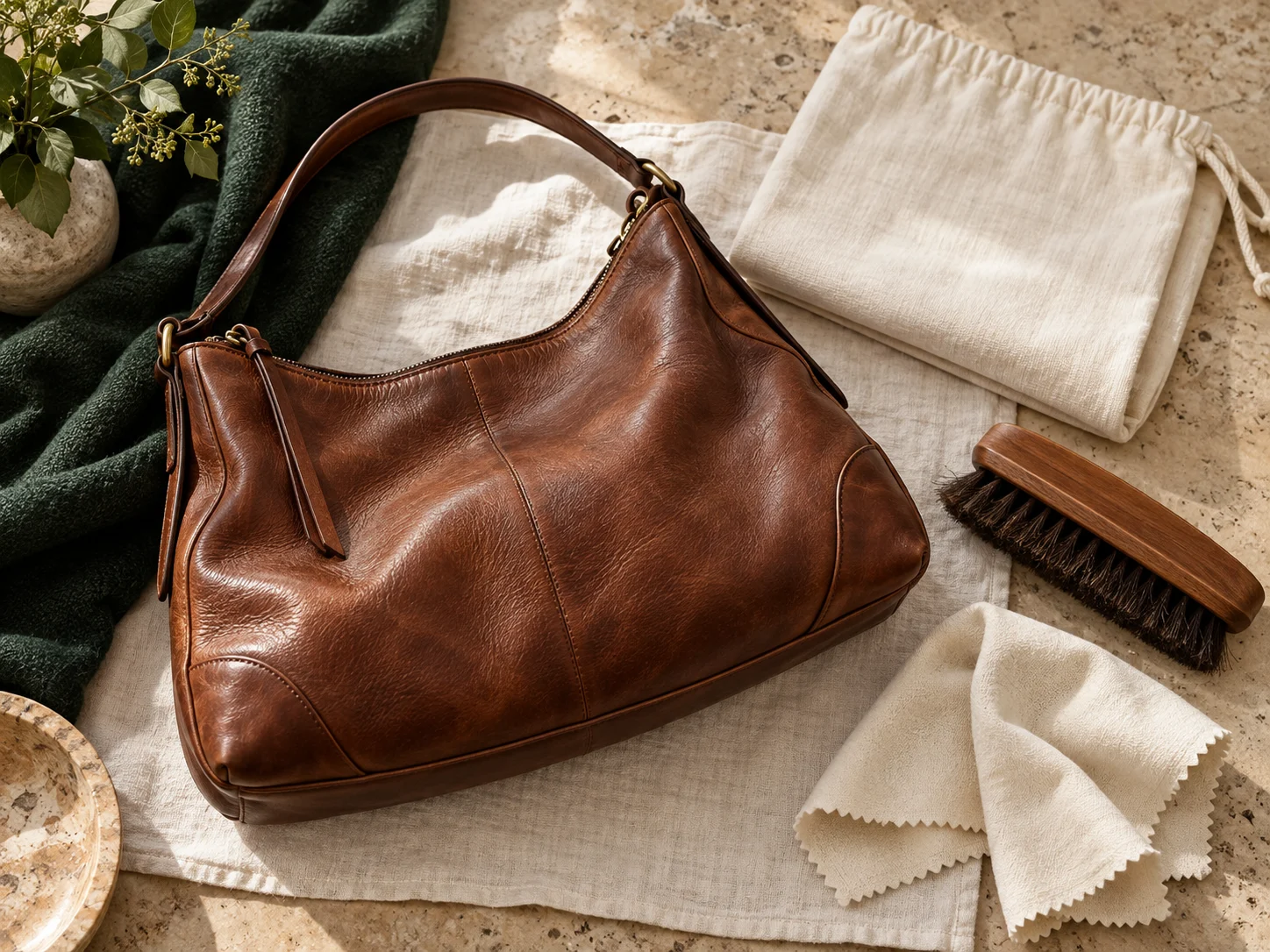
Separate cleaning from repair
Cleaning, local colour touch-ups and recolouring are different treatments. Ask what was done, where it was done, when and by whom, and retain any available records. “Maintained” is not a sufficient description of every treatment.
When the history is unknown, record that uncertainty. Do not describe an item as unrepaired simply because no receipt or visible repair is available.
Photograph the treatment area
Request front, back, corners, seams and lining under similar natural light, followed by close-ups of the affected area. Changes in sheen, texture, colour or flexibility may need further investigation, but photographs alone do not establish the process used.
For edge repairs, look at flexing areas on handles and straps. For replacement zips, closures or straps, record what was replaced and whether the current part corresponds to the version.
Ask about use after treatment
Confirm cleaning restrictions, recommended care and the service provider’s after-care terms. Do not add oil or solvents on top of an unknown finish to make it look newer.
Surface restoration does not establish that a structural problem was repaired. Check load-bearing handle roots, strap connections and the base separately. Seek suitable care advice for sticky finishes or unclear work.
Keep repair details in the quotation and order
Compare original and treated conditions explicitly rather than applying a universal repair discount. Treatment extent, usability, records and your own preferences all affect the decision.
Record known repairs, replacement parts and remaining defects in the final order, along with inspection and return terms. Cosmetic improvement does not justify relabelling a used item as unused.
This buying guide is not an authentication result or a stock or price guarantee. Verify the actual item and service terms before purchasing.